Custom Cap Manufacturer UK

Custom cap and headwear manufacturing from 50 pieces

NO FUGAZI is a headwear manufacturer based and managed in London, producing custom caps, bucket hats, beanies and balaclavas from 50 pieces in house. Caps are built panel by panel from your own pattern rather than embroidered onto a catalogue blank. Samples take 2-3 weeks, bulk production can take from 10 working days after you approve your sample, depending on the garment, materials, quantity and our production queue, and no tech pack is required to get a tailored quote.

Most custom cap suppliers sell you decoration, not a cap. You pick a crown from a catalogue, they stitch your logo into it, and the shape on your customer’s head is the same shape every other brand ordered that month. That is a real service, and for a one-off run of staff caps it is the right one.

This page is for the other job: a cap that is built. Panel count, crown height, whether the front is stiffened, how the brim curves, what holds it on the head, what the sweatband is made of and where the branding sits are all decisions you make, not defaults you inherit. Nothing is pulled off a shelf and decorated.

Headwear is also not one product. A trucker, a 5-panel, a dad cap, a bucket hat, a beanie and a balaclava are six different builds, and a beanie is knitted rather than cut. We make all of them, and they can run in the same drop.

You do not need a tech pack to start. A logo file and a photo of a cap you like is enough. Pattern and fit development happen in house from there.

Get a cap quote on WhatsApp

Headwear production at a glance

Cap and headwear manufacturing specification

Everything below is standing policy, not an estimate. Where a figure is a range, the range is real and depends on your spec.

Minimum order
50 piecesSpecific designs, colours and fabrics can affect the MOQ. Send your design and we will confirm it for yours.
Styles made
Caps, bucket hats, beanies, balaclavasTrucker, 5-panel, 6-panel baseball and dad caps, plus knitted headwear. Mixed drops can run together.
Production method
Cut and sew, or knitted to shapeCaps and buckets are built from cut panels. Beanies and knitted balaclavas are knitted. We hold no stock headwear and do not decorate ready-made blanks.
Crown options
Structured or unstructuredCrown height, panel count, brim shape and closure type are all yours to set.
Sample lead time
2-3 weeksSampling always comes first. Bulk starts only once you approve.
Bulk lead time
From 10 working days after sample approval**Estimated production time only. It depends on the garment, design complexity, fabric and trim availability, quantity and our production queue. Plus shipping to your destination.
Tech pack
Not requiredA sketch, a moodboard, a reference photo or a cap you already own is enough. Pattern and fit development happen in house. If you already have a tech pack we will quote from it.
Fabrics
Sourced or produced per orderCotton twill, washed cotton, corduroy, ripstop, wool-blend melton, poly mesh and knitted yarns. Pantone colour matching and custom-dyed fabrics are available. Yarn is from OEKO-TEX certified suppliers.
Shrinkage
Pre-shrunk, 1–3% residualEvery cloth we cut is low-shrinkage and pre-shrunk before it reaches the cutting table, so a garment that fits at sample stage still fits after it has been washed. Residual movement is 1–3%, which is inside the tolerance a graded size chart already allows for.
Decoration
Flat embroidery, 3D puff, appliqué, woven, leather and rubber patches, laser engraving, screen print, sublimation, DTF, vinyl, reflective
Branding
Custom sweatband labels, woven cuff tags, rubber and leather patches, custom eyelets and buttonsPrivate label and white label both available. Your headwear carries your branding, not ours.
Based
London, UKManaged from London; made at our own dedicated facility.
Quality control
4 stagesFabric inspection, in-process checks, post-production inspection and a final pre-shipment review.
Payment
Bank transferTerms are agreed as part of your quote.
Shipping
WorldwideThe UK is our priority market. We also ship to the USA, Canada, Australia and Europe.
Packaging
Recyclable frosted bags, swing tags, woven labels and custom tissuePolybags are recyclable frosted as standard. Swing tags, tissue and box print are specified with the rest of the trim, not left to the end.
Get a headwear quote on WhatsApp

Send a logo, a moodboard or a photo of a cap you already own. All three work.

Headwear is a category, not one product

A trucker, a 5-panel and a beanie share almost nothing except the head they sit on. Before we talk cloth, it is worth settling which build you are actually asking for, because the build decides everything after it.

The six builds we make most often

Panel count is the shorthand people use, but the real difference is whether the crown is stiffened, how tall it stands, and what holds it on the head.

6-panel baseball

How it is built
Six crown panels stitched in pairs, so there is a centre seam running front to back and a button at the apex. Front panels are usually fused or backed with buckram.
Usual closure
Snapback, strapback or fitted
What it is good at
The default brand cap. Structured, tall front, holds a logo upright.

5-panel camp cap

How it is built
One unbroken front panel with two sides and two rear panels. Lower crown, flat brim, often a lighter shell fabric.
Usual closure
Buckle, strapback or elastic
What it is good at
A single flat front with no centre seam through the middle of your artwork.

Dad cap

How it is built
Six panels again, but soft: no buckram, no fusing. The crown collapses forward and sits low on the head.
Usual closure
Strapback with a metal tri-glide or clip
What it is good at
Washed, worn-in looks and small front embroidery.

Trucker

How it is built
Structured foam or twill front panels with knitted mesh across the rear. Taller crown, pronounced front.
Usual closure
Plastic snapback
What it is good at
Large front decoration and hot-weather ventilation.

Bucket hat

How it is built
A crown, a side wall and a downturned brim, cut in two or four sections rather than panels. Reversible builds run two shells back to back.
Usual closure
None, or a chin cord
What it is good at
All-over prints, patch work and a soft, unstructured silhouette.

Beanie

How it is built
Knitted to shape rather than cut from cloth. Gauge, rib depth and cuff are set on the machine, not on a pattern table.
Usual closure
None. Fit comes from the rib
What it is good at
Winter drops, knit-in logos, cuffed or cuffless shapes.

Balaclava

How it is built
A knitted or cut-and-sewn hood with a face aperture. The opening shape is the design: full face, open oval, eyes only or a tube that pulls down.
Usual closure
None, or a rear drawcord
What it is good at
Statement winter pieces and coverage without a separate hat and neck warmer.

You can order more than one build in the same production run. The MOQ is 50 pieces, and specific designs, colours and fabrics can affect it, so tell us the split you want and we will confirm the minimum for yours.

The cloth the crown is cut from

Crown fabric does two jobs at once. It sets the look, and it decides how a needle behaves when it goes through it. A dense stitch count on a light shell will pucker; the same design on heavy twill sits flat.

Cotton twill

Where it is used
The standard crown cloth for 6-panels, 5-panels and trucker fronts. Mid to heavy weights hold a structured crown; lighter weights soften it.
How it takes decoration
Takes flat embroidery cleanly and supports 3D puff without a fight. The safest starting point.

Washed or brushed cotton

Where it is used
Dad caps and unstructured 5-panels. Garment washing knocks the finish back and gives a worn-in hand.
How it takes decoration
Fine for small to mid embroidery. Very dense fills can pull a soft, unfused panel out of shape.

Corduroy

Where it is used
Camp caps and winter 6-panels. Wale size changes the whole character of the cap.
How it takes decoration
Stitches sink between the wales, so type needs weight. A patch reads more cleanly than fine embroidery.

Ripstop and technical shell

Where it is used
Light 5-panels and running-style caps. Packable, quick drying, often with a soft brim.
How it takes decoration
Needs backing under any stitch. Woven and rubber patches usually beat dense embroidery here.

Wool-blend melton

Where it is used
Winter camp caps and earflap builds. Heavier hand, matte surface.
How it takes decoration
Excellent for embroidery and for felt or chenille lettering at scale.

Polyester mesh

Where it is used
The rear of a trucker. Open knit, springs back, breathes.
How it takes decoration
Not a decoration surface. Keep artwork on the solid front panels.

Acrylic, wool or merino knit

Where it is used
Beanies and knitted balaclavas. Acrylic holds colour and shape; merino is finer and warmer for its weight.
How it takes decoration
Knit-in jacquard, a folded woven label on the cuff, or embroidery worked over a backing so the knit does not distort.

If you already own a cap whose crown shape and hand you like, send it. Matching an existing cap is faster and more accurate than describing one, and you will feel the result on your sample before bulk starts.

Finishing

Cap finishing, up close

Embroidery, hardware, print placement and the stitching around them, photographed on finished pieces rather than mocked up on a blank.

  • Gold embroidered chest logo on a black hoodie, with matching metal drawcord tips

    Embroidery

  • Close-up of a branded metal zip and the topstitching around a black garment pocket

    Hardware

  • Black long-sleeve tee with a screen-printed graphic across the chest and both sleeves

    Print

  • Black zip-through hoodie with a small embroidered chest mark

    Zip through

Threads, trims and hardware are specified per order, not picked off a stock list.

The decisions that define your cap

Six questions decide what your headwear actually is. We will ask them when you send your logo, and a rough view on each one turns a vague enquiry into an accurate quote. If you have no view at all, that is fine, and we will walk you through them.

Panel Count: 5 or 6

Six panels give a taller, rounder crown and a centre seam through the front. Five panels give a lower crown and one flat front with no seam through your artwork. Seven-panel builds sit between the two; a bucket is cut in sections rather than panels, and a beanie has none at all. Decide this first, because your front decoration depends on it.

Crown height and structure

Structured means a fused front panel or a buckram lining that holds the crown up and gives a logo something firm to sit on. Unstructured means neither, so the crown falls forward and sits low. Crown height then sets the character: low profile hugs the head, mid is the safe middle, high stands off the forehead and gives a big front graphic the room it needs.

Brim shape and build

Flat, pre-curved, or shipped flat for the wearer to curve themselves. The insert decides how much it holds: a stiff board keeps a flat brim flat, a softer one lets it break. Then the detail work, which is the part people forget: how many rows of top stitching run across the visor, whether the underside is a contrast colour, and whether the edge is bound in a sandwich of the crown fabric.

Closure: snapback, strapback, buckle or fitted

A plastic snap tab is the classic adjustable rear and the loudest option. A cotton strap with a metal tri-glide or clip is quieter and sits flatter. A metal buckle with a tuck-in tail suits camp caps. Elastic or a fitted crown removes the rear opening altogether, which is worth it if you want an uninterrupted rear panel to decorate. Every one of these changes what you can put on the back.

Sweatband, taping, eyelets and ventilation

The sweatband is the part that touches the wearer for hours, so its fabric matters more than its visibility: cotton for comfort, terry for absorbency, and it is where a size label or a woven brand mark goes. Taping over the crown seams tidies the inside and stops seam allowances rubbing. Eyelets can be stitched or metal, and can be left out entirely; on mesh-backed builds the rear panels do the ventilating instead.

Beanies: yarn, knit and shape

A beanie is knitted, not cut, so the decisions are different. You choose the yarn, how thick the knit is and the shape. A cuffed beanie has a folded turn-up that doubles the fabric at the brow and gives you a natural place for a label; a cuffless one is longer, slouchier and shows the crown shaping. The yarn is agreed for each project, and branding can be a woven label, embroidery or a design knitted in.

Decoration and Placement on Headwear

This is where headwear stops behaving like clothing. A cap gives you roughly six placements, each one small, curved and interrupted by a seam or a closure. What you can do is decided by where it goes, not by what looks best in a flat mockup.

Methods, and what each one does to a crown

Flat embroidery

How it reads
Stitched directly into the panel, low profile, sharp edges.
Where it belongs
Front centre, side hit, rear, sweatband edge.
Worth knowing
The workhorse. Small type needs to be sized up: below roughly a quarter inch, letterforms start closing up in thread.

3D puff embroidery

How it reads
Foam is laid under the stitch and trimmed away, so the design stands proud of the crown.
Where it belongs
Front centre on a structured cap, and almost nowhere else.
Worth knowing
Wants bold, closed letterforms and even stroke widths. Thin serifs, fine detail and sharp inside corners do not survive it. It also needs a fused front panel to push against.

Woven patch

How it reads
A flat woven badge, merrowed or laser-cut edge, applied to the panel.
Where it belongs
Front centre, including across a 6-panel centre seam.
Worth knowing
The way to carry fine detail, small type and gradients that embroidery cannot hold. It also bridges a seam that would otherwise split your logo.

Leather or PU patch

How it reads
Debossed or laser-etched, matte or waxed, stitched on.
Where it belongs
Front centre, usually on twill or corduroy.
Worth knowing
Reads premium and ages. Debossing is tonal, so contrast comes from the leather colour rather than the mark.

Rubber or PVC patch

How it reads
Moulded, glossy or matte, raised edges, weatherproof.
Where it belongs
Front centre on technical shells and ripstop.
Worth knowing
The right answer when the shell is too light to stitch into heavily.

Sublimation

How it reads
Dye bonded into the fibre with no hand feel.
Where it belongs
Full panels, bucket hats and polyester crowns.
Worth knowing
Needs a polyester-rich fabric and light grounds, and it cannot print white. It will not work on a cotton twill crown.

Screen print

How it reads
Flat opaque ink on the surface.
Where it belongs
Bucket hats and flat brim undersides.
Worth knowing
Wants an unbroken flat area, so it is awkward on a curved, seamed crown and easy on a bucket brim.

Knit-in jacquard

How it reads
The logo is knitted into the beanie itself rather than added afterwards.
Where it belongs
Beanie body or cuff.
Worth knowing
Two-colour graphic work built at the knitting stage. Set at the start of production, not bolted on later.

Labels and trims

How it reads
Woven cuff labels, sweatband labels, printed under-brim, branded closure hardware.
Where it belongs
Cuff, sweatband, brim underside, rear strap.
Worth knowing
On a plain cap these quiet marks are the branding. They draw less attention than a front logo, and buyers still notice them.

The six placements, and the trap in each one

  • Front centre. On a 5-panel you get one flat, uninterrupted panel. On a 6-panel there is a seam straight down the middle of it, so either the artwork is split into two halves that must line up across the seam, or you use a patch that sits over the top of it. This single fact decides panel count for a lot of brands.
  • Side hit. Sits on the side panel, usually above and forward of the eyelet. It is a small area, and the panel curves away, so keep it to a mark or short type rather than a full lockup.
  • Rear. Placement here is dictated by the closure. A snapback leaves a gap in the middle, so artwork is either split either side of it or moved up above the strap. A fitted crown has an unbroken rear panel and takes a centred mark comfortably.
  • Brim, top and underside. A visor logo, or a print on the under-brim that only the wearer and anyone standing close ever sees. The under-brim is also where a contrast colour reads hardest.
  • Sweatband. Woven or printed inside the band. Nobody sees it in a photo, and every customer sees it when they put the cap on.
  • Beanie cuff. A folded woven label on the turn-up is the most common beanie mark. Embroidery works too, but it goes through a stretchy knit, so it is backed and kept compact so the cuff still gives when it is pulled on.

Before any embroidery is run, your artwork is digitised: converted into a stitch file with stitch direction, density, underlay and pull compensation set for the fabric it is going into. That is a production step we do in house, and it is the reason the same logo needs different treatment on melton, on ripstop and on a knitted cuff.

More ways to finish a cap

Everything below is available on a cap and specified at sampling, not added afterwards. What suits your artwork depends on the artwork, the cloth and where it sits.

Vinyl transfer

How it reads
Cut film heat-pressed onto the garment. Flat, solid and precise.
Best for
Names, numbers, one-offs and short runs where a screen would not pay for itself.
Worth knowing
It sits on top of the cloth, so across a large area it reads as a panel and breathes less than a print.

Laser engraving

How it reads
The surface burned back to a tonal mark. Quiet, permanent and completely flat.
Best for
Leather patches, nylon shells and tonal branding where colour would be too loud.
Worth knowing
Tonal only. There is no colour, and the result depends on what the material scorches to.

Reflective print and embroidery

How it reads
Retroreflective film or thread that stays flat in daylight and lights up under a headlight.
Best for
Outerwear, windbreakers and anything worn after dark.
Worth knowing
It reads as grey in daylight, so the design has to work as a grey mark first.

Appliqué embroidery

How it reads
A cut fabric shape laid on and stitched down at the edge. Layered, with real depth.
Best for
Large chest and back logos, varsity lettering, anything that would be too dense to fill with thread.
Worth knowing
It needs simple shapes. Fine internal detail has to be embroidered on top or dropped.

3D puff embroidery

How it reads
Foam laid under the stitch so the mark stands off the surface.
Best for
Cap fronts and bold letterforms — the standard for a structured six-panel.
Worth knowing
It needs a minimum stitch width and simple outlines. Thin type collapses and small detail closes up.

Woven and rubber labels

How it reads
Woven damask or satin for the neck, moulded rubber or silicone for a hem tab or chest badge.
Best for
Inside neck, hem, sleeve and back-pocket branding.
Worth knowing
Rubber needs a simple shape and a minimum thickness. Very fine type in a woven label closes up below about 4mm.

Custom hardware

How it reads
Eyelets, drawcord tips, buttons, zip pullers and rivets, finished to your metal and engraved with your mark.
Best for
The details a customer touches first, where a stock trim gives a piece away.
Worth knowing
Custom hardware carries its own tooling lead time, so it is decided at sampling rather than added later.

Built to the same standard as everything else we make

Real production, not a mockup. Caps are cut, blocked, stitched and finished by hand, then checked at four stages before they leave the factory.

As seen on

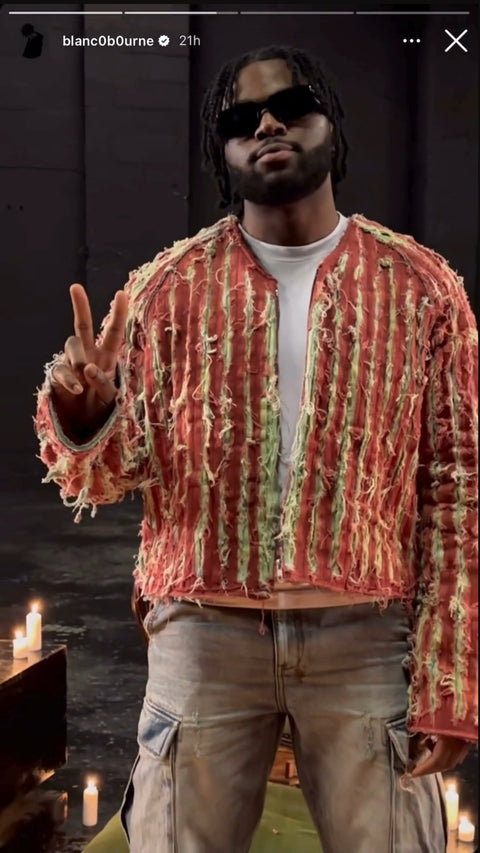
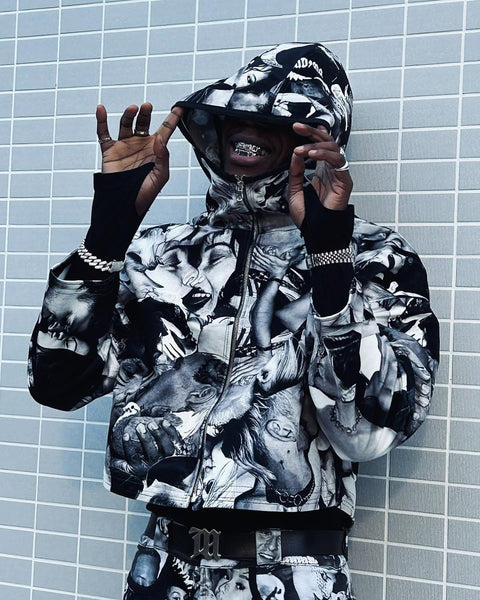
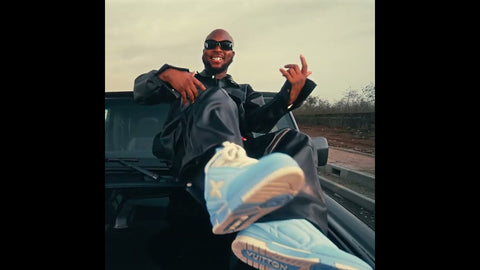
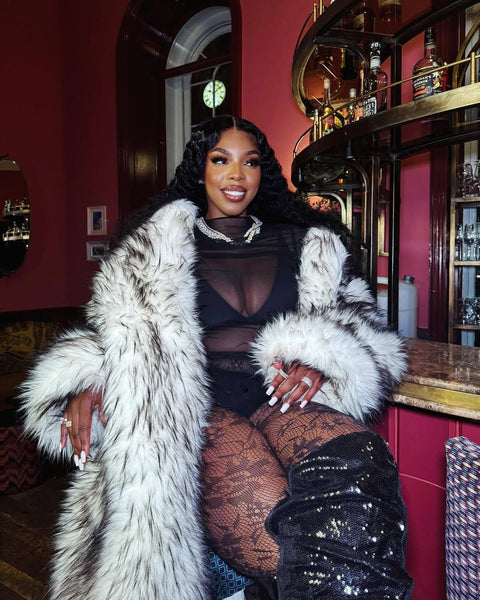
Our work has been seen on Che Lingo, Blanco, Grace Ajilore and King Promise, and our work has appeared in NME, Teen Vogue, the Crunchyroll Anime Awards and Retail Jeweller.

Headwear is made to the same standard as the clothing: your panel pattern, your crown, your closure, your labels, checked at four stages before it ships. Send your logo and the styles you want and we will quote it.

Get a Headwear Quote on WhatsApp

From logo file to delivered headwear

Six steps, and no tech pack needed to begin.

Samples take 2-3 weeks, and bulk production can take from 10 working days after you approve your sample, depending on the garment, materials, quantity and our production queue, plus shipping time to you.

1. Send your headwear idea

Send your headwear idea

WhatsApp is quickest

Send whatever exists: a sketch, a logo file, a reference photo, or a cap you already own whose crown shape and fit you want to match. If you would rather measure one yourself, our guide to measuring a cap for manufacturing shows each point to take. We will ask which builds you want, how the front should be decorated, and whether the rear needs to be adjustable, then send a tailored quote. If your design is not finished, our team provides full design support.

  • MOQ is 50 pieces. Specific designs, colours and fabrics can affect it, so ask about yours

2. Panel pattern and crown development

Panel pattern and crown development

Your shape, not a catalogue shape

We develop the panel pattern: crown height, panel count, seam positions, brim template and curve, sweatband depth and closure placement. Fitted styles are graded across your size range; adjustable styles are set up around the closure you chose. Knitted pieces skip the pattern table and are specified by yarn, knit thickness and shape instead.

  • Pattern and fit development are handled in house. No tech pack needed

3. Fabric, trims and digitising

Fabric, trims and digitising

Sourced and set up to spec

Crown fabric, buckram or fusing, sweatband, taping, eyelets, closure hardware and labels are all sourced for your order. Pantone colour matching and custom-dyed fabrics are available. Your artwork is then digitised into a stitch file, with density, underlay and puff height set for the exact fabric it is going into.

  • Thread and fabric colours matched to your palette before anything is stitched

4. Your headwear sample

Your headwear sample

2-3 Weeks

You get the cap in your hands before bulk. Put it on. Check how the front logo sits once the crown is on a head rather than flat on a table, check the brim curve, work the closure, and look at the inside of the sweatband. A free sample of each design is included with every committed bulk order; a standalone sample without a bulk commitment is charged. One sample revision round is free, further revisions are chargeable, and changes to your quote are always free.

  • Nothing goes to bulk until you approve your sample

5. Bulk production

Bulk production

From 10 working days*

Every piece in the run is measured against the cap you signed off. Panels are cut and blocked, crowns closed, brims built, sweatbands set and decoration applied in house, with your labels and trims to spec.

  • From 10 working days after sample approval*, plus shipping
  • *Estimated production time only. It depends on the garment, design complexity, fabric and trim availability, quantity and our production queue.

6. Quality control and shipping

Quality control and shipping

4 stages, then worldwide

Every order passes fabric inspection, in-process checks, post-production inspection and a final pre-shipment review. On headwear that includes checking stitch registration on the front panel, brim shape consistency and that closures work on every piece. Your order then ships worldwide, with the UK as our priority market.

  • Checked at four stages before anything leaves the factory

Cap and headwear manufacturing FAQs

Straight answers to what brands ask before commissioning a headwear run.

What is your minimum order for custom caps and beanies?

Do you embroider blank caps, or make the cap itself?

Should my cap be 5-panel or 6-panel?

Structured or unstructured crown, and how do I choose?

Will 3D puff embroidery work with my logo?

Snapback, strapback, buckle or fitted?

Can you make bucket hats, beanies and balaclavas as well as caps?

Do I need a tech pack, and how long does a headwear order take?

As seen in

As seen on

  • Blanco wearing NO FUGAZIBlanco
  • Che Lingo wearing NO FUGAZIChe Lingo
  • King Promise wearing NO FUGAZIKing Promise
  • Grace Ajilore wearing NO FUGAZIGrace Ajilore

Ready to make your headwear?

Send your logo and a photo of a cap you like. We will come back with a tailored quote, make your sample first, and start bulk production only once you approve it.

Get Your Cap Quote on WhatsApp