Custom Puffer Jacket Manufacturer UK

Custom Puffer Jackets, Manufactured From 50 Pieces

NO FUGAZI is a UK based custom puffer jacket manufacturer. We build cut-and-sew outerwear to your own pattern from 50 pieces, with the shell fabric, fill weight, baffle layout, lining, zips and trims all specified by you rather than picked off a blank. Samples take 2-3 weeks; bulk production takes 3-8 weeks after you approve your sample, plus shipping.

We are based and managed in London and manufacture at our own dedicated overseas facility. Every jacket is made to order, so there are no stock puffers sitting in a warehouse waiting for a logo. Each one is cut, stitched and finished by hand.

You do not need a tech pack. A sketch, a moodboard, reference photos or a jacket you already own is enough to quote from. If the design is not finished, we handle pattern development and fit development in house ourselves.

At a glance

Puffer Jacket Manufacturing Specification

The fixed facts for a custom puffer jacket production run with NO FUGAZI. Everything else, from shell fabric to fill weight to baffle layout, is specified per order and confirmed in your quote.

Minimum order
50 piecesSpecific designs, colours and fabrics can affect the MOQ. Send your spec and we will confirm it for your jacket.
Sample lead time
2-3 weeks
Bulk lead time
3-8 weeks after sample approvalPlus shipping to your destination.
Tech pack
Not requiredA sketch, a moodboard, reference photos or a jacket you already own is enough. We do the patterns and the fit development in house.
Construction
Cut and sew, made to orderBuilt from your own pattern, not printed onto a stock jacket. Cut, stitched and finished by hand.
Colour
Pantone matched or custom-dyedOn a coated shell, dyeing the fabric usually gives a cleaner brand colour than printing onto it.
Branding
Embroidery, chenille patches, custom labels, woven tags, custom trimsScreen print, sublimation and DTF are available where the shell fabric and the placement suit them.
Sampling
Always before bulkA free sample of each design is included with every committed bulk order. One revision round is free. A standalone sample without a bulk commitment is charged.
Quality control
4 stagesFabric inspection, in-process checks, post-production inspection and a final pre-shipment review.
Payment
Bank transferTerms are agreed as part of your quote.
Based
London, UKManaged from London and manufactured at our own dedicated overseas facility.
Shipping
WorldwideThe UK is our priority market. We also ship to the USA, Canada, Australia and Europe.
Get a puffer jacket quote

Send a sketch, a reference photo or a jacket you already own. All work.

What You Decide When You Commission a Puffer Jacket

A puffer is not one garment. It is a shell, a fill and a lining held together by a stitch pattern, and six decisions set how it looks, how warm it is and what it costs to make. You do not need to arrive with the answers. This is what we work through with you before anything is sampled.

1. The shell fabric

The face fabric sets the look before anything else does. Woven nylons and polyesters cover most streetwear puffers: matte or high shine, plain taffeta or ripstop, peached for a soft handle or left crisp and papery for a louder, technical finish.

Denier is the number worth asking about. A higher denier means a thicker yarn, a tougher fabric, more weight and a stiffer drape. Coatings on the reverse add water repellency and stop fill migrating through the weave, and they change how the jacket sounds and moves as much as how it feels.

2. Fill and loft

Fill decides warmth, bulk and a large share of the cost. Synthetic wadding is specified by weight, and the step from a light fill to a heavy one changes the silhouette as much as it changes the warmth.

Loft is what the fill does once it recovers, and it is what people mean when they say a jacket looks expensive. Over-quilted or under-filled panels read flat however good the fabric is. Down and down-blend builds behave differently again, needing a downproof shell and sealed chambers. Tell us the look and the season and we will confirm what suits your spec.

3. Baffles and quilting

Every stitch line through a filled panel is a place the fill cannot sit, so quilting is a warmth decision and a design decision at the same time. Sewn-through quilting, where the stitch passes through shell, fill and lining together, is the cleanest and most common build, and it puts a cold line at every seam.

Baffled construction walls the chambers so the fill keeps its loft across the seam, at more labour and more cost. Then there is the pattern itself: wide horizontal channels for a stacked, chunky look, narrow channels or a diamond for something flatter and sleeker, box quilting for structure. Wide baffles hold more loft but let the fill shift further.

4. Lining and internals

The lining is the half of the jacket the wearer actually touches. Smooth taffeta slides over a hoodie without dragging. A brushed or jersey lining feels warmer and reads more premium, and adds weight and bulk the pattern has to account for.

It is also the most under-used branding surface on outerwear. A contrast colour, an all-over printed lining or a custom woven one turns the inside of the jacket into part of the design, seen only by the person who bought it. Internal pockets, a media port, a hanging loop and how the seams are finished are all settled here.

5. Zips, hardware and trims

Hardware is where cheap outerwear gives itself away. Decide the type and the gauge: a light coil zip, a moulded plastic tooth or a heavier metal zip, and whether it runs one way or two, so the jacket can open from the hem when the wearer sits down.

Then everything around it. A storm flap over the zip closed with press studs or hook and loop, custom zip pullers, branded tape, cord ends, toggles, and the finish across all of them. We produce custom trims, so these are specified to match the jacket rather than left to whatever is on the shelf.

6. Hood, cuffs, hem and fit

A hood can be fixed or removable by zip or press stud, and its volume, its adjusters and how it sits with the collar up are worth deciding before sampling rather than after. Cuffs can be elasticated, ribbed, tabbed or built with an inner storm cuff. The hem can be straight, dropped or drawcorded.

Fit is the part most people underestimate. Loft eats room, so a puffer pattern needs ease built in for the thickness of the fill: a shell that fits flat will not fit once it is filled, and the armhole and sleeve pitch have to allow for the bulk. We develop the pattern, grade the sizes and run fit development as part of the job.

Weight, Warmth and the Season You Are Selling Into

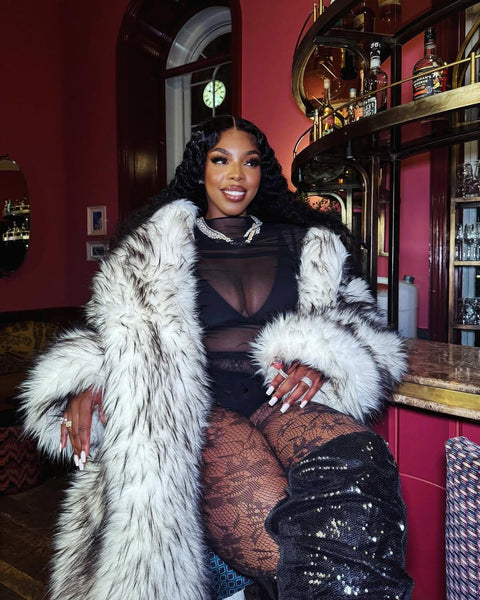
Custom puffer jacket made for Grace Ajilore.

Warmth costs weight, bulk and money, in that order. A heavier fill and a higher denier shell make a warmer, tougher jacket that is also thicker on the body, more expensive to ship and narrower in the window it sells in.

So decide the season before the spec. A lighter fill with a sleek quilt sells from early autumn through to spring and layers over a hoodie without swallowing it. A heavy fill with deep baffles is a statement piece for a short, cold stretch of the year. Both are made the same way here. They are different answers to the same question, and it is worth answering before we cut the first sample.

Branding and Decoration That Works on Outerwear

Outerwear takes decoration differently from a t-shirt. The shell is usually coated, often slippery and broken up by quilt lines, so placement is planned against the pattern rather than added at the end.

Embroidery

The most reliable finish on a shell. It is worked on the panel before that panel is filled and closed, or placed somewhere unfilled such as a yoke, a sleeve, a collar or a chest panel, so the needle never has to pass through a fill chamber.

Chenille patches

Heavier, raised and built for outerwear. Made as a separate piece and applied to the panel, so a large chest or back logo does not have to fight the quilt lines running under it.

Custom labels and woven tags

Main label, neck and hem labels, a sleeve tab, a woven tag on the zip pull. On a jacket carrying no printed logo, the labels are the branding, and they are the detail buyers check first.

Custom trims and hardware

Custom zip pullers, cord ends, toggles, press studs and branded tape, finished to match the jacket. On outerwear the hardware is on show, so it is specified with the same care as the shell.

Screen print, DTF and sublimation

All available, but the shell decides. Print needs a flat, stable area, so large placements go on unbroken panels rather than across quilting. DTF is heat applied, and coated synthetics limit how hot and how long you can press. Sublimation works only into light polyester and prints darker than the ground, so it is planned as panel artwork before cutting.

Pantone matching and custom-dyed shells

Usually the cleanest way to put a brand colour on outerwear: dye the fabric instead of printing onto it. Colour is matched to Pantone and confirmed on your sample before bulk production starts.

From Sketch to Delivered Jackets

The same six steps run on every puffer order. The lead times below are real ranges rather than best cases: samples take 2-3 weeks, bulk takes 3-8 weeks once you have approved the sample, and shipping sits on top of both.

1. Your Spec

Send Whatever You Have

Message us on WhatsApp with the idea in whatever form it exists: a sketch, a moodboard, reference photos or a jacket you want reworked. We will ask about length, fit, shell, fill and colour, then send a tailored quote. No tech pack needed — if you do not have one, we create it.

2. Pattern and Fit

Ease Built In for the Loft

We develop the pattern from your measurements or from a reference garment, with ease built in for the thickness of the fill, then grade it across your size range. Pattern cutting, grading and fit development are part of the job, not extras bolted on later.

3. Shell, Fill and Trims

Sourced to Your Spec

We hold no stock garments, so shell fabric, lining, wadding, zips and trims are sourced or produced for your order. Pantone colour matching and custom dyeing happen at this stage, and decoration placement is planned against the quilt lines before anything is cut.

4. Sampling and Approval

In Your Hands in 2-3 Weeks

Your sample is made in 2-3 weeks so you can judge loft, weight, fit and finish in person rather than on a screen. A free sample of each design is included with every committed bulk order; a standalone sample without a bulk commitment is charged. One sample revision round is free, further revisions are chargeable, and changes to your quote are always free.

5. Bulk Production

3-8 Weeks After You Approve

Once you approve the sample it becomes the blueprint for the run. Bulk production takes 3-8 weeks at our own dedicated facility, with every jacket cut, stitched and finished by hand and your labels, tags and trims applied to spec.

6. Quality Control and Shipping

Four Checks Before It Leaves

Every order passes four stages of quality control: fabric inspection, in-process checks, post-production inspection and a final pre-shipment review. It then ships worldwide, with the UK as our priority market and regular deliveries to the USA, Canada, Australia and Europe.

Puffer Jacket Manufacturing FAQs

Straight answers to what brands ask before commissioning their first run of outerwear.

What is the minimum order for custom puffer jackets?

What fill should I use, down or synthetic?

How do baffles and quilting change the jacket?

How do you handle sizing and fit on outerwear?

Can you match my brand colours on a puffer jacket?

How long does it take to manufacture custom puffer jackets?

As seen in

As seen on

  • Grace Ajilore wearing NO FUGAZIGrace Ajilore
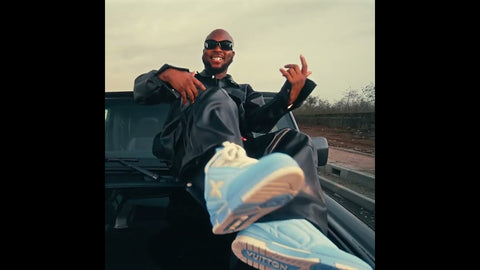
  • King Promise wearing NO FUGAZIKing Promise
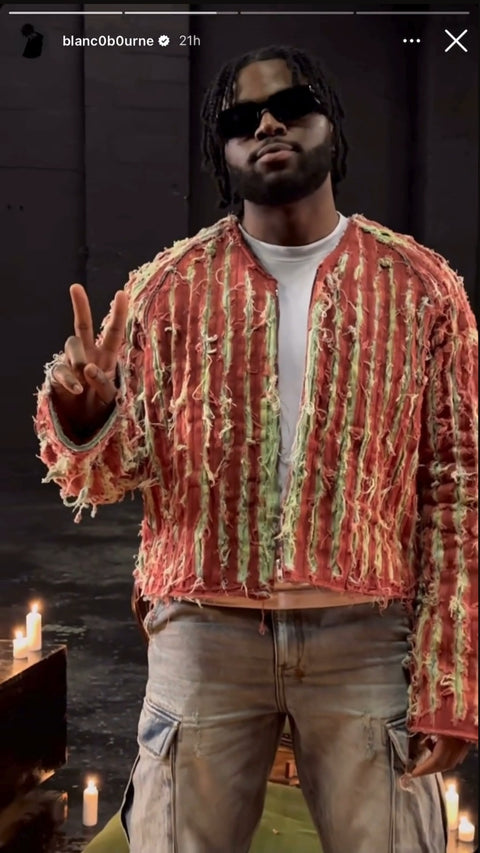
  • Blanco wearing NO FUGAZIBlanco
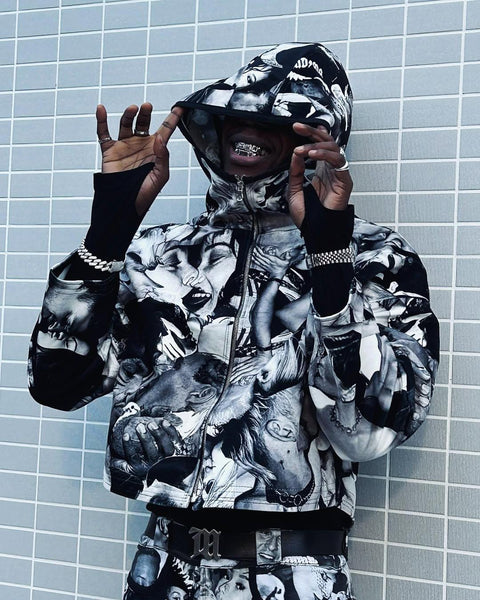
  • Che Lingo wearing NO FUGAZIChe Lingo

SPEC YOUR PUFFER JACKET

Send a sketch, a reference photo or a jacket you want reworked. We will come back with a tailored quote, make your sample first, and start bulk production only once you have approved it.

Get a Puffer Jacket Quote on WhatsApp