

Custom activewear and gym wear manufacturing from 50 pieces
Activewear is the least forgiving thing a new brand can launch. A hoodie that runs slightly large is still a hoodie. A legging cut on the wrong fabric goes sheer in a squat, rolls at the waist, bags at the knee after three wears and comes back to you.
Almost all of that is settled before anything is cut: which fabric, how far it stretches, how well it recovers, and how much smaller than the body the pattern is cut. Get that sequence right and the sewing is straightforward. Get it wrong and no amount of good stitching rescues the garment.
This page sets out what we ask an activewear founder about, and why. You do not need answers to all of it and you do not need a tech pack. A sketch, a moodboard, a reference photo or a garment you already own and want bettered is enough to start. We handle the pattern and fit development from there.
Activewear production at a glance
Activewear manufacturing specification
Everything below is standing policy, not an estimate. Where a figure is a range, the range is real and depends on your spec.
- Minimum order
- 50 piecesSpecific designs, colours and fabrics can affect the MOQ. Send your range and we will confirm it for yours.
- Production method
- Cut and sewGarments are made from patterns developed for your fit. We hold no stock and do not decorate ready-made blanks.
- Tech pack
- Not requiredA sketch, a moodboard, a reference photo or a garment you already own is enough. We handle patterns and fit development in house. No tech pack needed.
- Sample lead time
- 2-3 weeksSampling always comes first. Bulk starts only once you approve.
- Bulk lead time
- 3-8 weeks after sample approvalPlus shipping to your destination.
- Fabric
- Sourced or produced per orderComposition, stretch, weight and opacity are part of your spec. We do not publish a fabric list; what is available for your garment is confirmed with your quote. Pantone colour matching and custom-dyed fabrics are available. Yarn is from OEKO-TEX certified suppliers.
- Shrinkage
- Pre-shrunk, 1–3% residualEvery cloth we cut is low-shrinkage and pre-shrunk before it reaches the cutting table, so a garment that fits at sample stage still fits after it has been washed. Residual movement is 1–3%, which is inside the tolerance a graded size chart already allows for.
- Fit development
- Patterns, fit and grading includedCompression fit depends on how far your fabric stretches and recovers, so fabric is settled before the pattern is cut.
- Decoration
- Sublimation, high-density silicone, screen print, DTF, vinyl, embroidery, 3D puff, appliqué, reflective print and pipingSublimation is the usual route on performance polyester because nothing sits on the surface to crack. The right method depends on how far the panel stretches.
- Branding
- Woven and rubber labels, reflective piping, custom zip pullers, swing tagsPrivate label and white label both available. Your garments carry your branding, not ours.
- Based
- London, UKManaged from London; made at our own dedicated facility.
- Quality control
- 4 stagesFabric inspection, in-process checks, post-production inspection and a final pre-shipment review.
- Payment and shipping
- Bank transfer, shipped worldwideTerms are agreed as part of your quote. The UK is our priority market. We also ship to the USA, Canada, Australia and Europe.
- Packaging
- Recyclable frosted bags, swing tags, woven labels and custom tissuePolybags are recyclable frosted as standard. Swing tags, tissue and box print are specified with the rest of the trim, not left to the end.
Send a sketch, a moodboard or a garment you already own. All three work.
Performance fabric and what each property does
Activewear is a fabric decision before it is a design decision. Six properties do almost all the work, and the complaints brands bring us are nearly always one of the six.
Moisture management
- What it does
- Synthetic fibres do not soak water into the fibre the way cotton does. The knit moves sweat to the outer face where it can evaporate, which is why a polyester training top feels dry and the same shape in cotton feels heavy.
- Where it goes wrong
- Cotton-rich athleisure is comfortable and photographs beautifully, but it holds sweat. Decide early which of the two garments you are actually making.
Four-way stretch
- What it does
- Fabric that stretches across its width and along its length. Anything that has to move in two directions at once, such as a legging, a sports bra or a fitted short, wants it.
- Where it goes wrong
- Two-way stretch on a compression legging feels restrictive at the bottom of a squat and throws the strain onto the seams instead of the cloth.
Recovery
- What it does
- How completely the fabric returns to shape after being stretched. Recovery, not stretch, is what keeps knees and seats from bagging out.
- Where it goes wrong
- A fabric can have generous stretch and poor recovery. It feels excellent in the hand and looks tired a fortnight after your customer buys it.
Elastane content
- What it does
- Elastane, also called spandex and sold under brand names such as Lycra, is the fibre that provides both the stretch and the recovery. It is the number that changes everything about how a garment fits.
- Where it goes wrong
- Chasing a headline percentage. The figure only means something alongside the base fibre, the knit and the weight, and it is the reason the pattern cannot be cut before the fabric is chosen.
Opacity
- What it does
- How much light passes through the fabric once it is stretched over the body. Squat-proof is not a marketing word, it is a real and frequently failed requirement.
- Where it goes wrong
- It is judged flat, unstretched, in the wrong colour. Light shades and heather greys are the hardest to hold, and a fabric that passes in black can fail in grey.
Handfeel
- What it does
- A brushed or peached inside face lifts a soft nap: warmer, more matte and the feel most people call buttery. A smooth face is cooler, slicker and takes a print more cleanly.
- Where it goes wrong
- A brushed nap can flatten and pill with wear and it is warmer than some training wants. A smooth face shows every seam and print edge, so the sewing has nowhere to hide.
You do not have to arrive with answers to all six. Sending a garment whose fabric you like is a faster brief than a specification, and we can work from it.
How much elastane, roughly
Treat the table below as orientation rather than a specification. Elastane behaves differently in a dense knit than in a thin one, so 12 per cent in one fabric is not 12 per cent in another.
5-8% elastane
- What it gives you
- Enough give to move freely. No hold, and no meaningful support.
- Typically used for
- Training tops, loose shorts, layering pieces, athleisure cuts.
10-15% elastane
- What it gives you
- Real hold with recovery that survives washing. The workhorse range.
- Typically used for
- Leggings, sports bras, fitted shorts. Most gym ranges live here.
18% and up
- What it gives you
- Firm compression. Strong hold, harder to pull on, and the fit tolerance narrows.
- Typically used for
- Compression pieces where support is the product rather than a feature.
What is available for your spec is confirmed with your quote, and you feel the result on your sample before anything goes to bulk.
Polyester, nylon or cotton blend
Polyester and nylon are both synthetic and both move moisture. Polyester is the fibre sublimation bonds to, so if you want all-over print it is effectively the decision. Nylon tends to feel softer and more matte with a denser drape, and it does not take sublimation the same way, so decoration has to be planned around it. A cotton-elastane blend is the athleisure route: easy to wear, good against the skin, and the weakest of the three at moving sweat.
We do not publish a fabric catalogue. Availability moves, and quoting from a stale list helps nobody. Tell us what the garment has to do, or send one whose fabric you like, and we will confirm the options for your spec with your quote.
If you want a specific claim on your labelling or your product page, whether that is an applied finish, a performance rating or a named fibre brand, raise it at the enquiry stage and we will tell you whether the fabric supports it. We will not put a claim on your garment that the cloth cannot back up.
Finishing
Activewear finishing, up close
Embroidery, hardware, print placement and the stitching around them, photographed on finished pieces rather than mocked up on a blank.
-

Embroidery
-

Hardware
-

Print
-

Zip through


Threads, trims and hardware are specified per order, not picked off a stock list.
Putting artwork on fabric that moves
On a hoodie, almost every decoration method works and the choice is aesthetic. On stretch fabric it is technical. Anything that sits on top of the cloth has to stretch as far as the panel underneath it, and most inks cannot.
Sublimation
- How it behaves on stretch
- Dye bonded into the fibre. Nothing sits on the surface, so there is no film to crack and no hand feel. It stretches because it is the fabric.
- Best for
- All-over prints, panel graphics, full-colour artwork, and anything on a high-stretch area.
- Worth knowing
- Needs polyester-rich fabric, so it will not work on nylon or cotton-rich cloth. Needs light grounds and cannot print white, so white in your artwork is the fabric showing through.
Screen print
- How it behaves on stretch
- Ink laid on the surface as a film. On a panel that stretches, the ink is the part that cannot.
- Best for
- Looser, low-stretch pieces: training tops, woven shorts, layering garments.
- Worth knowing
- Strong flat colour, consistent across a whole run, and each colour is a separate screen. Keep it off high-stretch panels.
DTF (direct to film)
- How it behaves on stretch
- A printed transfer heat-applied to the surface with a defined edge. It carries the same limitation as screen print.
- Best for
- Low-stretch garments, photographic or multi-colour artwork, runs with many different designs.
- Worth knowing
- Excellent detail. It sits on top of the cloth rather than becoming part of it, and you feel it.
Embroidery
- How it behaves on stretch
- Stitch locks the area it covers. The embroidered patch stops stretching while the fabric around it carries on.
- Best for
- Small marks on stable areas: a chest logo on a training top, a hit on a waistband or a cuff.
- Worth knowing
- It needs a backing you can feel from the inside. Scale it up on a stretch panel and it puckers and distorts the fit.
Chenille and acid wash
- How it behaves on stretch
- Both are ours to offer, and both are wrong here. Chenille is a thick tufted patch; acid wash is a finish for cotton-rich cloth.
- Best for
- Streetwear, not performance wear.
- Worth knowing
- We would rather tell you at enquiry than at sampling. If your range spans both worlds, we can run different methods across different styles.
Labels are part of the same decision. Custom labels, woven tags and custom trims are all available, and Pantone colour matching applies to your fabric and your artwork. The one worth settling early is the neck label: a woven tag nobody notices inside a hoodie is a known irritant inside a vest worn against bare skin. Tell us where you want your branding and we will confirm what works with your fabric.
More ways to finish a activewear piece
Everything below is available on a activewear piece and specified at sampling, not added afterwards. What suits your artwork depends on the artwork, the cloth and where it sits.
Rhinestone and diamante
- How it reads
- Heat-set stones that catch the light and sit proud of the cloth. Physical rather than printed.
- Best for
- Wordmarks, small chest logos and back hits where the point is shine.
- Worth knowing
- It adds weight, and stones shed if a garment is tumble-dried. Care labelling matters more here than with any print.
Sublimation
- How it reads
- Dye taken into the fibre itself, so there is nothing sitting on the surface to crack or peel.
- Best for
- All-over prints, panel fades and anything edge-to-edge on polyester.
- Worth knowing
- Polyester only, and it cannot print white — the base cloth supplies every light tone, so it will not work on a dark ground.
High-density silicone print
- How it reads
- Thick, raised ink with a soft rubbery hand and a hard edge.
- Best for
- Bold logos, numbers and type that should feel deliberate under the hand.
- Worth knowing
- Holds a sharper edge than puff, but costs more per hit and does not suit fine detail.
Vinyl transfer
- How it reads
- Cut film heat-pressed onto the garment. Flat, solid and precise.
- Best for
- Names, numbers, one-offs and short runs where a screen would not pay for itself.
- Worth knowing
- It sits on top of the cloth, so across a large area it reads as a panel and breathes less than a print.
Reflective print and embroidery
- How it reads
- Retroreflective film or thread that stays flat in daylight and lights up under a headlight.
- Best for
- Outerwear, windbreakers and anything worn after dark.
- Worth knowing
- It reads as grey in daylight, so the design has to work as a grey mark first.
Glow in the dark
- How it reads
- Phosphorescent ink or thread — off-white by day, green glow once charged.
- Best for
- Back hits and sleeve details on pieces made for the evening.
- Worth knowing
- It has to be charged by light and the glow fades over minutes, not hours. It is an effect, not a feature.
Appliqué embroidery
- How it reads
- A cut fabric shape laid on and stitched down at the edge. Layered, with real depth.
- Best for
- Large chest and back logos, varsity lettering, anything that would be too dense to fill with thread.
- Worth knowing
- It needs simple shapes. Fine internal detail has to be embroidered on top or dropped.
3D puff embroidery
- How it reads
- Foam laid under the stitch so the mark stands off the surface.
- Best for
- Cap fronts and bold letterforms — the standard for a structured six-panel.
- Worth knowing
- It needs a minimum stitch width and simple outlines. Thin type collapses and small detail closes up.
DTG print
- How it reads
- Ink jetted straight into the cotton. Soft to the hand and photographic in detail.
- Best for
- Full-colour artwork, gradients and photographic prints, especially in small runs.
- Worth knowing
- Cotton only, and it needs a pre-treat. Colour sits brightest on a light ground and it is slower per piece than a screen.
Acid wash
- How it reads
- Bleach carried on pumice, so the colour breaks up in high-contrast mottling.
- Best for
- Hoodies, tees and sweats where the wash is the design.
- Worth knowing
- No two pieces come out identical. That is the look, but it means you cannot approve one piece and expect the run to match it exactly.
Vintage wash
- How it reads
- An even, softened fade — the garment reads as though it has already been worn in.
- Best for
- Pieces meant to look lived-in from the first wear.
- Worth knowing
- The wash takes the print down with the cloth, so artwork is set slightly heavier to survive it.
Enzyme wash
- How it reads
- Enzymes eat back the surface fibres, leaving a softer hand and a cleaner face.
- Best for
- Anything that should feel broken-in without looking faded, and knits prone to pilling.
- Worth knowing
- It removes a little weight, so the finished GSM lands slightly under the greige figure.
Sunfade
- How it reads
- A graduated fade running across the garment, as though it has been left in the sun.
- Best for
- Gradient effects on hoodies, tees and shells.
- Worth knowing
- It is directional, so panel orientation has to be fixed on the pattern before cutting or the gradient breaks at the seams.
Garment dye
- How it reads
- Dyed after it is made up, so the seams and stitching take the colour tonally.
- Best for
- Single-colour pieces with a soft, slightly uneven depth of colour.
- Worth knowing
- Colour varies between dye lots. Order the whole run in one lot, and expect a shade shift on a repeat.
Woven and rubber labels
- How it reads
- Woven damask or satin for the neck, moulded rubber or silicone for a hem tab or chest badge.
- Best for
- Inside neck, hem, sleeve and back-pocket branding.
- Worth knowing
- Rubber needs a simple shape and a minimum thickness. Very fine type in a woven label closes up below about 4mm.
Custom hardware
- How it reads
- Eyelets, drawcord tips, buttons, zip pullers and rivets, finished to your metal and engraved with your mark.
- Best for
- The details a customer touches first, where a stock trim gives a piece away.
- Worth knowing
- Custom hardware carries its own tooling lead time, so it is decided at sampling rather than added later.
Piping and reflective piping
- How it reads
- A corded edge set into the seam, in a contrast colour or a reflective tape.
- Best for
- Side seams, panel lines, sleeve heads and windbreaker sets.
- Worth knowing
- Piping is built into the seam as it is sewn, so it has to be on the pattern before cutting.
Activewear is built through full garment development rather than adapted from existing blanks.
Sizing and fit for a garment cut smaller than the body
Negative ease
A compression garment is deliberately patterned smaller than the body it is made for, and the stretch of the fabric closes the gap. The amount taken out is the reduction, and it is the single number that decides whether the garment supports you, slides down, or refuses to go on at all.
How much you take out depends on how far your fabric stretches and how well it recovers. Change the fabric and the pattern is wrong. That is why an activewear order runs fabric first, pattern second.
Grading across your range
Grading a compression garment is not a matter of adding a centimetre per size. The reduction has to keep working from your smallest size to your largest, and a body at the top of the range is not a scaled copy of one at the bottom.
Decide your size range before grading rather than after, and fit the sample on real people at both ends of it, not only on whoever happens to be in the studio.
Testing the sample properly
A hoodie sample can be judged by looking at it. An activewear sample has to be worn. Squat in it, run in it, sit in it for an hour, then wash it and do the lot again. Check opacity stretched, in daylight, in the colour you are actually selling.
Note every place it rides, rolls or rubs. One sample revision round is free, so it pays to gather all of that before you send your notes back.
Your size chart
Build your published size chart from your own graded specification, not from a competitor's website. It is the first thing a customer checks and the most common reason activewear comes back.
We give you the measurements your garment is actually made to. What you print on the product page is then a commercial decision you make from real numbers rather than borrowed ones.
How an activewear order runs
The lead times below are real ranges rather than best cases: samples in 2-3 weeks, bulk in 3-8 weeks after you approve your sample, plus shipping time to you.
1. Send your activewear idea

WhatsApp is quickest
Send whatever exists: a sketch, a moodboard, a reference photo, or a garment you already own that fits the way you want yours to fit. Tell us what the piece has to do in the gym and we will ask about fabric, fit and decoration from there. If the design is not finished, our team provides full design support and handles the technical development.
- MOQ is 50 pieces. Designs, colours and fabrics can affect it, so ask about yours
2. Fabric first

Stretch, recovery and opacity
We hold no stock, so fabric is sourced or produced for your order. Composition, elastane content, weight and handfeel are settled now, because the pattern cannot be cut correctly until we know how far the cloth stretches and how well it comes back. Pantone colour matching and custom-dyed fabrics are available.
- Fabric is settled before the pattern, not alongside it
3. Pattern, reduction and grading

Cut for your fabric
The pattern is developed against the fabric you chose: rise, inseam, waistband depth, gusset, panel lines and the reduction that gives the garment its hold. It is then graded across your full size range so the fit works at both ends of it rather than only in the middle.
- Pattern cutting, fit development and grading are included as standard
4. Your sample

2-3 Weeks
You train in the garment before anything goes to bulk. Squat, run, sit, wash, repeat, and check opacity stretched in your real colour. A free sample of each design is included with every committed bulk order; a standalone sample without a bulk commitment is charged. One sample revision round is free, further revisions are chargeable, and changes to your quote are always free.
- Nothing goes to bulk until you approve your sample
5. Bulk production

3-8 weeks after approval
Your approved sample becomes the reference for every piece in the run. Garments are cut, stitched and finished by hand at our own dedicated facility, with your labels, tags and trims applied to spec.
- 3-8 weeks after sample approval, plus shipping
6. Quality control and shipping

4 stages, then worldwide
Every order passes fabric inspection, in-process checks, post-production inspection and a final pre-shipment review before it is packed. Your order then ships worldwide. The UK is our priority market, and we also deliver to the USA, Canada, Australia and Europe.
- Checked at four stages before anything leaves the factory
Custom activewear FAQs
As seen in


As seen on
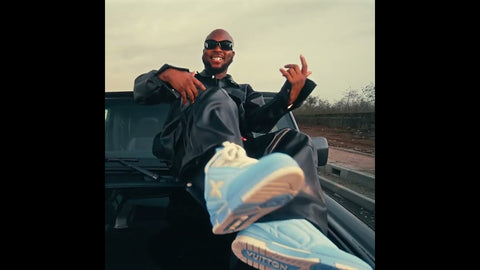 King Promise
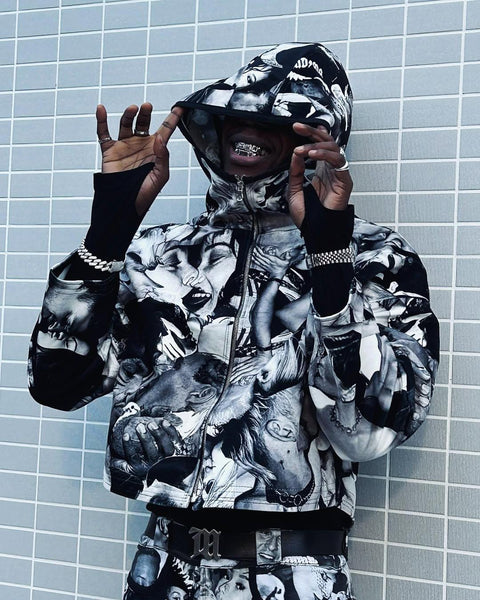 Che Lingo
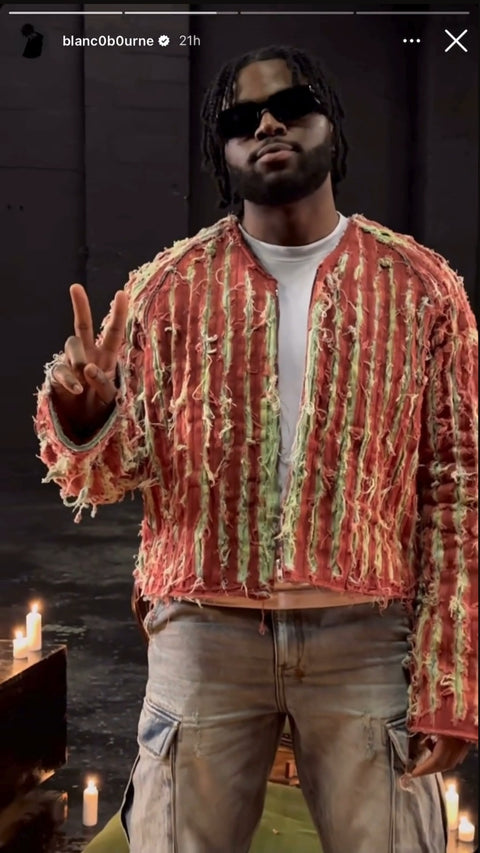 Blanco
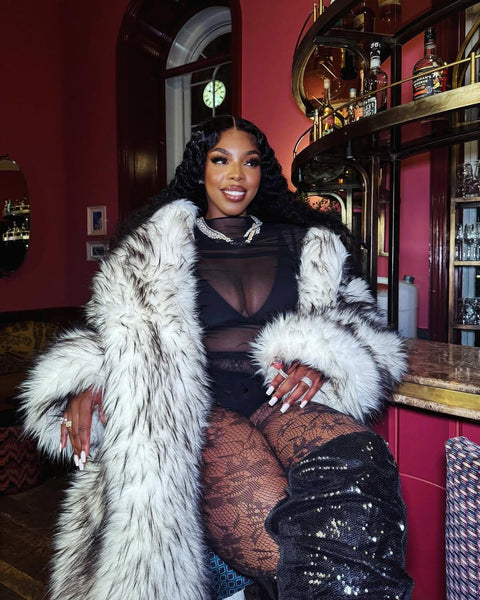 Grace Ajilore
Ready to spec your activewear range?
Send a sketch, a moodboard or a garment you already own and want bettered. We will come back with a tailored quote, settle the fabric, cut your pattern to it, and make your sample before anything goes to bulk.
Get Your Activewear Quote on WhatsApp
