Bomber Jacket Manufacturer UK

Custom bomber jackets, built from the MA-1 up

NO FUGAZI is a bomber jacket manufacturer based and managed in London, producing cut-and-sew bombers from 50 pieces at our own dedicated facility. Shell fabric, lining, rib knit, zip type, pocket layout and trims are all yours to specify. Samples take 2-3 weeks, bulk production takes 3-8 weeks after you approve your sample, and no tech pack is required to get a tailored quote.

The bomber is the most copied silhouette in streetwear and the easiest to get quietly wrong. What separates a good one from a flat one is never the logo. It is the depth of the hem rib, whether the collar stands or folds, where the sleeve seam crosses the shoulder, and whether the body is short enough for the rib to land on the hip instead of below it.

None of that is decided by ordering a blank and putting artwork on it. We hold no stock jackets. Your bomber is cut from a pattern built for your fit, in a shell you chose, with rib knitted to your colour and a lining specified rather than inherited. That is why this page is a list of decisions instead of a list of features.

You do not need a tech pack to start. A sketch, a moodboard, a reference photo or a bomber you already own is enough, and if you already have a tech pack we will quote straight from it. Pattern and fit development happen in house.

Get a bomber jacket quote on WhatsApp

Bomber jacket production at a glance

Bomber jacket manufacturing specification

Everything below is standing policy, not an estimate. Where a figure is a range, the range is real and depends on your spec.

Minimum order
50 piecesSpecific designs, colours and fabrics can affect the MOQ. Send your jacket spec and we will confirm it for yours.
Production method
Cut and sewBuilt from a pattern developed for your fit. We hold no stock jackets and do not decorate ready-made blanks.
Sample lead time
2-3 weeksSampling always comes first. Bulk starts only once you approve.
Bulk lead time
3-8 weeks after sample approvalPlus shipping to your destination.
Tech pack
Not requiredA sketch, a moodboard, a reference photo or a bomber you already own is enough. Pattern and fit development happen in house. If you already have a tech pack we will quote from it.
Shell options
Nylon, poly twill, satin, suede, woolSourced or produced per order. Pantone colour matching and custom-dyed fabrics are available. Faux fur, triple-dyed gradient faux fur, mohair, real fur on request, and acrylic wool knitted to your gauge.
Shrinkage
Pre-shrunk, 1–3% residualEvery cloth we cut is low-shrinkage and pre-shrunk before it reaches the cutting table, so a garment that fits at sample stage still fits after it has been washed. Residual movement is 1–3%, which is inside the tolerance a graded size chart already allows for.
Lining
Plain, quilted, reversible or brushedQuilting on a bomber is a lining panel, not a filled and baffled shell. Custom printed and custom woven linings are available.
Rib knit
Collar, cuffs and hem, knitted to your specGauge, depth, elastane content and tipping stripes are all yours to set. Rib carries its own lead time inside the production window.
Zips and hardware
One-way or two-way front zip, sleeve pocket zip, snapsCustom zip pullers, branded tape, press studs and cord ends are produced to match the jacket.
Decoration
Embroidery, 3D puff, appliqué, chenille, screen print, high-density silicone, DTF, sublimation, vinyl, laser engraving, reflective, glow in the darkWhich method suits you depends on the shell and the placement. Most of it is worked on flat panels before assembly.
Branding
Woven, rubber and leather labels, custom hardware, zip pullers, buttons, piping, swing tagsPrivate label and white label both available. Your jackets carry your branding, not ours.
Based
London, UKManaged from London; made at our own dedicated facility.
Quality control
4 stagesFabric inspection, in-process checks, post-production inspection and a final pre-shipment review.
Payment
Bank transferTerms are agreed as part of your quote.
Shipping
WorldwideThe UK is our priority market. We also ship to the USA, Canada, Australia and Europe.
Packaging
Recyclable frosted bags, swing tags, woven labels and custom tissuePolybags are recyclable frosted as standard. Swing tags, tissue and box print are specified with the rest of the trim, not left to the end.
Get a bomber jacket quote on WhatsApp

Send a sketch, a reference photo or a bomber you already own. All three work.

Shell, lining and rib: the three fabrics in a bomber

A bomber is not one fabric decision, it is three. The shell sets what the jacket looks like from across a room. The lining sets what it feels like to put on and how warm it is. The rib knit at the collar, cuffs and hem is the part nobody itemises and everybody notices when it is wrong.

1. The shell fabric

The MA-1 flight jacket was made in nylon, and nylon is still the reference point. Everything else on this list is a deliberate move away from it, and each one changes how the jacket has to be sewn and how it can be decorated.

Flight nylon

How it reads
The original. Light, wind resistant, faintly lustrous, and crisp enough to hold a standing collar. The closest thing to an MA-1 without buying one.
What it asks of the make
It is slick to cut and it remembers every needle hole, so seam lines and decoration placement are fixed before sampling rather than moved afterwards. A fine coil zip suits the weight.

Poly or cotton twill

How it reads
Matte and dry, with more body than nylon. Reads workwear or utility rather than military.
What it asks of the make
The most forgiving shell we build bombers in. It presses flat, so a full back graphic sits clean, and it takes screen print and embroidery without argument.

Satin

How it reads
High shine, souvenir-jacket lineage. Colour reads deep and it photographs louder than any other shell.
What it asks of the make
It marks, and it shows needle holes, so stitch density is kept down and artwork is worked on the flat panel. It wants a full lining, or the shine drags on knitwear underneath.

Suede or faux suede

How it reads
Matte, weighty, no shine at all. Pushes the silhouette away from military and towards something quieter.
What it asks of the make
No heat-applied decoration: DTF and sublimation are out. Embroidery, an applied patch or a debossed trim instead. Seams have to be right first time, because the nap does not recover from being unpicked.

Wool melton or boiled wool

How it reads
Varsity lineage. Dense, warm, and it holds a strong shoulder line instead of collapsing.
What it asks of the make
Heavy enough that the zip and the rib have to be specified up to carry it. It is also the shell where contrast sleeves and leather sleeves start to make sense.

If you already own a bomber whose shell you like, send it. Matching a fabric in the hand is faster and more accurate than describing one, and it settles the handle, the sheen and the weight in a single step.

2. The lining, and whether it is quilted

The lining is the half of the jacket the wearer touches, and on a bomber it is also the half that shows every time the jacket is worn open. It is the most under-used branding surface on the garment.

Plain taffeta or poly

What it does
Slides over a hoodie without dragging and adds almost nothing to the weight or the warmth.
Worth knowing
The default on a nylon or satin body. A contrast colour, an all-over print or a custom woven lining turns it into part of the design with no change to the construction.

Quilted lining

What it does
A diamond or channel quilt on a thin wadding, which adds a little warmth and a lot of visual weight when the jacket hangs open.
Worth knowing
The quilt is built as its own lining panel and then set into the jacket. Nothing is stitched through the face fabric, so the shell stays smooth and unbroken.

Reversible

What it does
Two finished faces, most famously a sage shell against a high-visibility orange inside.
Worth knowing
It is close to making two jackets. Both faces need finished seams, both need their own pockets and zip treatment, and the rib has to read correctly from either side.

Sherpa, fleece or brushed jersey

What it does
Turns a light bomber into something that carries a cold month.
Worth knowing
It has bulk, and bulk needs room. The body and the armhole are cut with extra ease, or the jacket fits in the shell and not on the wearer.

A quilted bomber is not a puffer. On a bomber the quilting is a lining detail: there is no baffle, no chamber and no fill weight to specify, and the shell is never stitched through. If you want real loft, warmth measured in fill weight, and a shell built around it, that is a different garment and a different pattern. We make those too, on our custom puffer jacket manufacturing page.

3. The rib knit

Collar, cuffs and hem are knitted rib, produced separately from the shell and joined in at the end. Four things are yours to set, and all four are settled with the fabric rather than with the artwork.

Gauge and density

What changes
A fine, dense rib looks sharper and holds a collar upright. A chunky rib reads sportier and softer, and it blouses the body more at the hem.

Depth

What changes
A deep hem rib pulls the body in and gives the cropped, blousing shape the silhouette is known for. A shallow rib leaves the jacket straighter and longer on the hip.

Elastane content

What changes
Recovery, not stretch. Rib with no elastane goes slack at the cuff within a season, which is the most common complaint about a cheaply made bomber.

Tipping stripes and colour

What changes
Stripes are knitted into the rib itself, never printed on, so the colourway is locked at the yarn stage. Solid rib can be matched to the shell or run deliberately in contrast.

Because rib is knitted rather than cut from your shell, it carries its own lead time inside your production window. It is one of the first things we confirm on your spec, not one of the last.

Finishing

Bomber jacket finishing, up close

Embroidery, hardware, print placement and the stitching around them, photographed on finished pieces rather than mocked up on a blank.

  • Gold embroidered chest logo on a black hoodie, with matching metal drawcord tips

    Embroidery

  • Close-up of a branded metal zip and the topstitching around a black garment pocket

    Hardware

  • Black long-sleeve tee with a screen-printed graphic across the chest and both sleeves

    Print

  • Black zip-through hoodie with a small embroidered chest mark

    Zip through

Threads, trims and hardware are specified per order, not picked off a stock list.

Six decisions that make or break a bomber

These are the questions we work through with you before anything is sampled. You do not need to arrive with answers to all six, and a rough view on each is enough to turn a vague enquiry into an accurate quote.

Rib collar, cuffs and hem

The three pieces of knitted rib do more to date a bomber than any graphic on it. Deep hem rib pulls the body in and gives the short, blousing shape. Shallow rib leaves the jacket straighter. Elastane in the yarn is what stops the cuffs going slack by the second season, and any tipping stripe is knitted in at the yarn stage rather than added later.

Raglan or set-in sleeve

The MA-1 is raglan: the sleeve seam runs from the underarm up to the neck, there is no shoulder seam, and the arm moves freely under the jacket. A set-in sleeve gives a defined shoulder point and a sharper line. It is a pattern decision, not a finish, and it moves the boundaries of where a back graphic can sit, so it is settled before sampling.

The sleeve zip pocket

The utility pocket on the outer left sleeve reads bomber faster than anything else on the jacket. Its angle, its length, whether the zip is exposed or hidden under a flap, whether there are pen slots inside it, and whether the puller is branded are all yours. Leaving it off is also a decision, and a clean sleeve changes the whole character of the jacket.

One-way or two-way front zip

A one-way zip is simpler and lies flatter down the front. A two-way opens from the hem as well, so the jacket sits comfortably over a hoodie and does not ride up when the wearer sits down. Gauge matters as much as direction: a fine coil suits nylon and satin, a moulded tooth or a heavier metal zip suits wool and suede, and the wrong gauge is visible from across a room.

Storm flap, snaps and wind guard

A flap laid over the zip and closed with press studs, an inner wind guard tucked behind it, or neither. The flap changes the front of the jacket visually and it changes the pattern underneath, because it adds a facing width that any chest placement has to clear. Snap type, finish and whether they carry your mark are specified with the rest of the hardware.

Body length, pockets and fit

A bomber is short by definition, and exactly where the hem rib lands on the hip is the difference between cropped and boxy. Pockets follow the same logic: slanted welts hold the flight-jacket line, patch pockets read workwear, and hand-warmers set into the front seam disappear entirely. We develop the pattern, run fit development and grade it across your full size range.

Where a bomber gets decorated, and why it changes the pattern

A bomber gives you one big flat canvas and several small awkward ones. Almost all of it is decorated while the panels are still flat and separate, which is why moving a graphic after your sample is not a change of artwork. It is a change to the order the jacket is built in.

Back panel

What fits there
The full graphic. Large embroidery, chenille lettering, a screen-printed block, an applied twill patch.
When it happens
On the flat back panel, before the body is assembled.
What it changes
The hem rib eats the bottom of the panel, so artwork has to stop above the rib join or it vanishes into the gather. On a raglan body the sleeve seams cut across the top corners, so a full-width rectangle collides with them.

Chest, left or right

What fits there
A small embroidered mark, a woven label, a leather or rubber patch.
When it happens
Flat panel, before assembly.
What it changes
It has to clear the zip facing and the pocket bag underneath. The lining goes in afterwards, so the back of the embroidery is never on show to the wearer.

Outer upper sleeve

What fits there
A logo, a number, a flag-style tab, a small patch.
When it happens
On the flat sleeve panel only.
What it changes
Once a sleeve is closed it is a narrow tube. It will not sit flat under a hoop or a print platen without distorting, so a late sleeve placement means re-cutting, not just re-printing.

Sleeve pocket flap and zip

What fits there
A woven tab, a branded puller, a small embroidered mark on the flap.
When it happens
With the pocket, at sleeve stage.
What it changes
Small, but it is the detail people photograph. Custom pullers and branded tape are produced to your spec rather than picked from stock.

Collar stand and nape

What fits there
A short mark inside the collar stand, or above the main label.
When it happens
At trim and label stage.
What it changes
Rib does not hold a print, because it stretches and the ink cracks along the wale. Anything at the neck goes onto a woven tab or is knitted in.

Rib hem and cuffs

What fits there
Tipping stripes, a contrast colour, a knitted-in band.
When it happens
At the knitting stage, before the jacket exists.
What it changes
This is a yarn decision with its own lead time, so it is fixed with your fabric and not with your artwork.

Lining

What fits there
An all-over print, a custom woven lining, a large internal label.
When it happens
Before the lining is set into the shell.
What it changes
The one surface with no rib, no zip and no quilt lines in the way. It is the easiest place on a bomber to put something ambitious.

Which method suits you follows from the shell you chose. Embroidery and applied patches work on every shell on this page. Screen print is happiest on twill. DTF is heat applied, so it is ruled out on suede and handled carefully on coated nylon. Sublimation needs light polyester and is planned as panel artwork before cutting. Custom labels, woven tags and custom trims sit alongside any of them.

More ways to finish a bomber

Everything below is available on a bomber and specified at sampling, not added afterwards. What suits your artwork depends on the artwork, the cloth and where it sits.

Sublimation

How it reads
Dye taken into the fibre itself, so there is nothing sitting on the surface to crack or peel.
Best for
All-over prints, panel fades and anything edge-to-edge on polyester.
Worth knowing
Polyester only, and it cannot print white — the base cloth supplies every light tone, so it will not work on a dark ground.

High-density silicone print

How it reads
Thick, raised ink with a soft rubbery hand and a hard edge.
Best for
Bold logos, numbers and type that should feel deliberate under the hand.
Worth knowing
Holds a sharper edge than puff, but costs more per hit and does not suit fine detail.

Vinyl transfer

How it reads
Cut film heat-pressed onto the garment. Flat, solid and precise.
Best for
Names, numbers, one-offs and short runs where a screen would not pay for itself.
Worth knowing
It sits on top of the cloth, so across a large area it reads as a panel and breathes less than a print.

Laser engraving

How it reads
The surface burned back to a tonal mark. Quiet, permanent and completely flat.
Best for
Leather patches, nylon shells and tonal branding where colour would be too loud.
Worth knowing
Tonal only. There is no colour, and the result depends on what the material scorches to.

Reflective print and embroidery

How it reads
Retroreflective film or thread that stays flat in daylight and lights up under a headlight.
Best for
Outerwear, windbreakers and anything worn after dark.
Worth knowing
It reads as grey in daylight, so the design has to work as a grey mark first.

Glow in the dark

How it reads
Phosphorescent ink or thread — off-white by day, green glow once charged.
Best for
Back hits and sleeve details on pieces made for the evening.
Worth knowing
It has to be charged by light and the glow fades over minutes, not hours. It is an effect, not a feature.

Appliqué embroidery

How it reads
A cut fabric shape laid on and stitched down at the edge. Layered, with real depth.
Best for
Large chest and back logos, varsity lettering, anything that would be too dense to fill with thread.
Worth knowing
It needs simple shapes. Fine internal detail has to be embroidered on top or dropped.

3D puff embroidery

How it reads
Foam laid under the stitch so the mark stands off the surface.
Best for
Cap fronts and bold letterforms — the standard for a structured six-panel.
Worth knowing
It needs a minimum stitch width and simple outlines. Thin type collapses and small detail closes up.

Sunfade

How it reads
A graduated fade running across the garment, as though it has been left in the sun.
Best for
Gradient effects on hoodies, tees and shells.
Worth knowing
It is directional, so panel orientation has to be fixed on the pattern before cutting or the gradient breaks at the seams.

Woven and rubber labels

How it reads
Woven damask or satin for the neck, moulded rubber or silicone for a hem tab or chest badge.
Best for
Inside neck, hem, sleeve and back-pocket branding.
Worth knowing
Rubber needs a simple shape and a minimum thickness. Very fine type in a woven label closes up below about 4mm.

Custom hardware

How it reads
Eyelets, drawcord tips, buttons, zip pullers and rivets, finished to your metal and engraved with your mark.
Best for
The details a customer touches first, where a stock trim gives a piece away.
Worth knowing
Custom hardware carries its own tooling lead time, so it is decided at sampling rather than added later.

Piping and reflective piping

How it reads
A corded edge set into the seam, in a contrast colour or a reflective tape.
Best for
Side seams, panel lines, sleeve heads and windbreaker sets.
Worth knowing
Piping is built into the seam as it is sewn, so it has to be on the pattern before cutting.

Faux fur

How it reads
Pile fabric in any length, from a short shearling to a long shag.
Best for
Hoods, collars, full shells and trims.
Worth knowing
Pile has a direction. Every panel has to be cut the same way or the colour shifts between them.

Triple-dyed gradient faux fur

How it reads
Fur dipped through three tones so the colour moves along the pile rather than sitting flat.
Best for
Statement collars, hoods and full-length pieces.
Worth knowing
Because the gradient is dyed rather than printed, no two lots match exactly. Order the whole run in one lot.

Mohair and acrylic wool

How it reads
Mohair for a long, open, hairy face; acrylic wool knitted to your gauge for something denser.
Best for
Knitted panels, cardigans, collars and trims.
Worth knowing
Both are knitted to order rather than cut from stock cloth, which puts them at the longer end of the lead time.

Outerwear we cut and sewed from scratch

Real production, not a mockup. Every piece is cut, stitched and finished by hand, then checked at four stages before it leaves the factory.

As seen on

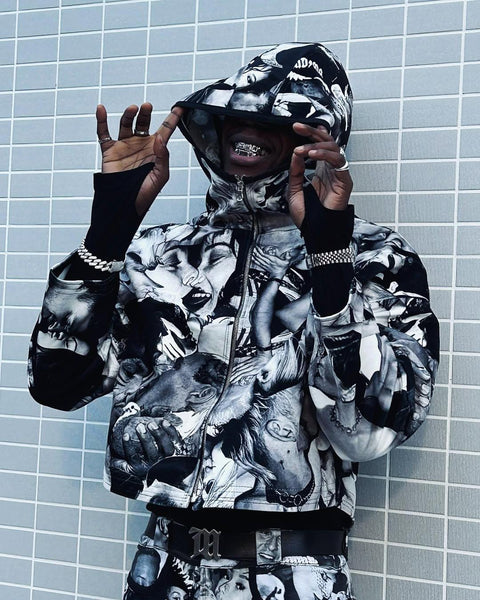
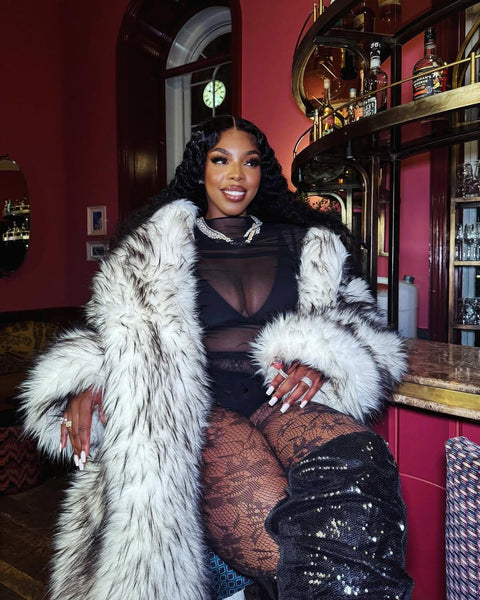
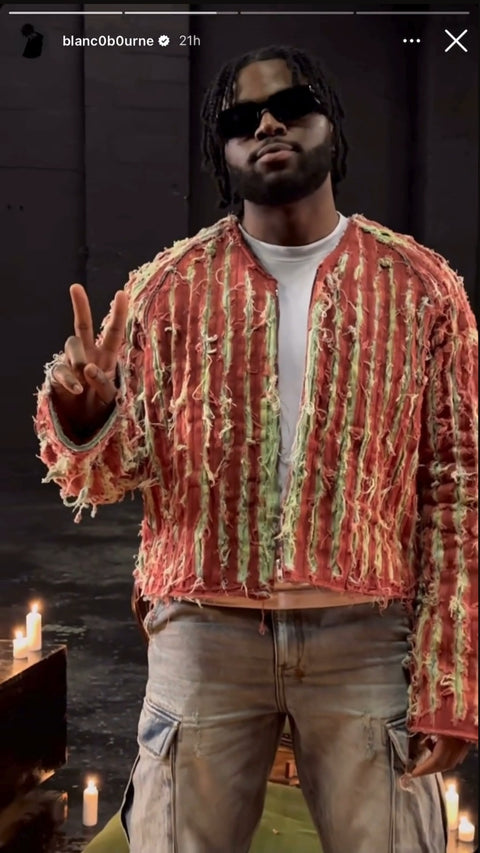
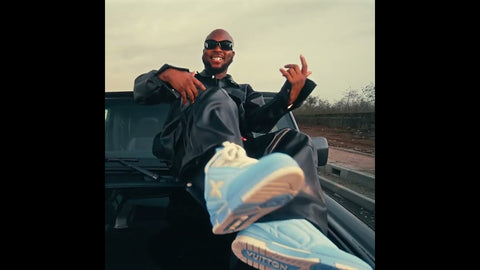
Our work has been seen on Che Lingo, Blanco, Grace Ajilore and King Promise, and our work has appeared in NME, Teen Vogue, the Crunchyroll Anime Awards and Retail Jeweller.

A bomber run starts the same way every time: your shell, your lining, your rib colour, your zip, your labels. Send what you have and we will quote it.

Get a Bomber Jacket Quote on WhatsApp

From reference photo to delivered bombers

Six steps, and no tech pack needed to begin.

The lead times below are real ranges rather than best cases: samples in 2-3 weeks, bulk in 3-8 weeks after you approve your sample, plus shipping time to you.

1. Send your bomber idea

Send your bomber idea

WhatsApp is quickest

Send whatever exists: a sketch, a moodboard, a reference photo, or a bomber you already own and want built better. We will ask which shell you are picturing, whether the lining is plain or quilted, and how you want the rib to sit, then come back with a tailored quote. If the design is not finished, our team provides full design support.

  • MOQ is 50 pieces. Specific designs, colours and fabrics can affect it, so ask about yours

2. Pattern and fit development

Pattern and fit development

Raglan or set-in, settled here

Once the quote is agreed we cut the pattern: body width and length, sleeve construction, armhole, collar stand height, rib depth at hem and cuff, and the position of the sleeve pocket. It is then graded across your full size range, so an XL is the same jacket as a small rather than a different garment stretched sideways.

  • Pattern cutting, fit development and grading are included as standard

3. Shell, rib, lining and trims

Shell, rib, lining and trims

Sourced to your spec

We hold no stock, so the shell is sourced or produced for your order and the rib is knitted to your colour and gauge. Zips, pullers, snaps, cord ends, custom labels and woven tags are specified now. Because rib and hardware carry their own lead times, this is the step that decides how the rest of the schedule runs.

  • Pantone colour matching and custom-dyed fabrics available

4. Your bomber sample

Your bomber sample

2-3 Weeks

You get the jacket in your hands before anything goes to bulk. Zip it up and sit down in it, put it over the thickest hoodie you sell, and check the sleeve pocket falls where your arm expects it. A free sample of each design is included with every committed bulk order; a standalone sample without a bulk commitment is charged. One sample revision round is free, further revisions are chargeable, and changes to your quote are always free.

  • Nothing goes to bulk until you approve your sample

5. Bulk production

Bulk production

3-8 weeks after approval

Your approved sample becomes the reference for every jacket in the run. Panels are decorated flat, the body and sleeves are closed, the lining is set in and the rib is joined last, with your labels, tags and trims applied to spec in house.

  • 3-8 weeks after sample approval, plus shipping

6. Quality control and shipping

Quality control and shipping

4 stages, then worldwide

Every order passes fabric inspection, in-process checks, post-production inspection and a final pre-shipment review. On a bomber that includes running every zip, checking the rib recovers after being stretched, and confirming decoration sits square to the seams. Your jackets then ship worldwide.

  • Checked at four stages before anything leaves the factory

Bomber jacket manufacturing FAQs

Straight answers to what brands ask before commissioning a bomber run.

What is the minimum order for custom bomber jackets?

What is the difference between a bomber and a puffer, and which should I make?

Can you make a true MA-1 style bomber, with the sleeve pocket and reversible lining?

Which shell fabrics can I have? Can you do satin, suede or wool?

Can the rib collar, cuffs and hem be a custom colour or have stripes?

Should my front zip be one-way or two-way?

How big can a back print or embroidery be on a bomber?

How long does a custom bomber jacket order take?

As seen in

As seen on

  • Che Lingo wearing NO FUGAZIChe Lingo
  • Grace Ajilore wearing NO FUGAZIGrace Ajilore
  • Blanco wearing NO FUGAZIBlanco
  • King Promise wearing NO FUGAZIKing Promise

Ready to spec your bomber?

Send a sketch, a reference photo, or a bomber you already own and want built better. We will come back with a tailored quote, make your sample first, and start bulk production only once you approve it.

Get Your Bomber Jacket Quote on WhatsApp