Custom Shorts Manufacturer UK

Cut-and-Sew Shorts Manufacturing From 50 Pieces

NO FUGAZI is a shorts manufacturer based and managed in London, producing custom shorts from 50 pieces at our own dedicated overseas facility. Sweat shorts, mesh shorts, cargo shorts, cycle shorts and matching short sets are cut and sewn from patterns developed for your fit, in fabric sourced or produced for your order. Samples take 2-3 weeks, bulk production takes 3-8 weeks after you approve your sample, and no tech pack is required to get a tailored quote.

A short is the shortest garment we make, and the least able to hide anything. There is no length for an error to disappear into. On a jogger, a centimetre of drift in the leg opening is swallowed by the drape. On a five-inch short it moves the hem across the thigh and changes who the garment is for.

Which is why this page is mostly about construction rather than cloth. Inseam, rise, waistband build, pocket bags, liner and hem finish decide whether your short reads as a gym piece, a summer streetwear piece or a mid-length classic, and every one of them is a pattern and sewing decision rather than a fabric decision. If your short is a performance piece and stretch is the harder question, our activewear manufacturing page covers fabric, recovery, elastane and opacity, and we send founders there instead of repeating it.

We make sweat shorts, mesh shorts, woven and cargo shorts, cycle shorts, and matching sets where the short is cut from the same roll as the tee. Nothing is pulled off a shelf and decorated. Patterns are developed for your fit, graded across your size range, then cut, stitched and finished by hand.

One scheduling note that only applies to this garment: shorts sell inside a narrow window. Count backwards from the drop. A sample takes 2-3 weeks, bulk takes 3-8 weeks after you approve it, and shipping sits on top. Brands that start in spring are usually landing stock as the season turns over.

No tech pack is needed to begin. A sketch, a moodboard, a reference photo or a pair you already own is enough, and we handle pattern and fit development from there.

Shorts production at a glance

Shorts manufacturing specification

Everything below is standing policy, not an estimate. Where a figure is a range, the range is real and depends on your spec.

Minimum order
50 piecesSpecific designs, colours and fabrics can affect the MOQ. Send your design and we will confirm it for yours.
Production method
Cut and sewShorts are made from patterns developed for your fit. We hold no stock garments and do not decorate ready-made blanks.
Sample lead time
2-3 weeksSampling always comes first. Bulk starts only once you approve.
Bulk lead time
3-8 weeks after sample approvalPlus shipping to your destination. Shorts sell in a narrow window, so count backwards from your drop date.
Tech pack
Not requiredA sketch, a moodboard, a reference photo or a pair you already own is enough. We handle patterns and fit development in house. No tech pack needed.
Inseam and liner
Your call, roughly 5 to 11 inches, lined or unlinedInseam, rise and leg opening are set on your pattern. Mesh liner, brief liner or unlined are all standard options.
Fabric
Sourced or produced per orderKnit, mesh, woven or stretch. Weight, composition and handfeel are your call, with Pantone colour matching and custom-dyed fabrics available. Yarn is from OEKO-TEX certified suppliers.
Decoration
Embroidery, screen print, sublimation, DTF, chenille patches, acid washWhat works depends on the fabric family you chose, not on preference.
Branding
Custom labels, woven tags and custom trimsJacquard waistband elastic, custom cord and tips included. Private label and white label both available. Your shorts carry your branding, not ours.
Based
London, UKManaged from London and manufactured at our own dedicated overseas facility.
Quality control
4 stagesFabric inspection, in-process checks, post-production inspection and a final pre-shipment review.
Payment
Bank transferTerms are agreed as part of your quote.
Shipping
WorldwideThe UK is our priority market. We also ship to the USA, Canada, Australia and Europe.
Get a shorts quote on WhatsApp

Send a sketch, a moodboard or a pair of shorts you already own. All three work.

Fabric Weight, and Why It Behaves Backwards on a Short Leg

A short is the only bottom where more weight makes the leg stand further away from the body rather than hang closer to it. Understand that one inversion and most fabric choices on this page answer themselves.

There is not enough leg for gravity to work

On a full-length trouser, the column of cloth below the knee acts as a counterweight. It pulls the thigh panel down and quietly straightens the whole leg out. A short has no such column. Below the crotch seam there may be only five to nine inches of fabric, and it is anchored at the top by a waistband and nowhere else.

So a heavy loopback that hangs beautifully as a jogger will, at a short inseam, sit out from the thigh and flare at the hem like a bell. A light jersey with the same pattern will collapse onto the leg and cling in humidity, which is the exact weather a short gets worn in. The pattern is not wrong in either case. The cloth and the length were chosen separately when they should have been chosen together.

The practical rule we work to: the shorter the inseam, the lighter the cloth needs to be before the hem stops standing away from the thigh. Push the inseam past nine inches and you can carry real weight again, because there is finally enough leg for it to hang from.

The fabric families a short is actually cut from

Shorts span more fabric families than any other garment we make. A sweat short, a mesh short, a cargo short and a cycle short have almost nothing in common at the roll, which is why a single weight chart is close to useless here. Match the family to the garment first, then settle the weight inside it.

Fabric familyWhat it isWhat it does to the short
Light single jerseyA thin, single-face knit, usually cotton or a cotton blend.Fluid and cool. It follows the thigh rather than standing off it, so a short inseam still reads as a short rather than a flare. It shows every ridge underneath, so pocket bags and liner seams have to be built cleanly.
French terry, mid weightLoopback knit with the loops left unbrushed on the inside face.The default sweat short. Enough body to keep the hem from curling, light enough that a seven-inch leg still falls rather than projects. Dries faster than a brushed fleece, which matters on a garment worn in heat.
Heavy loopbackThe same knit at a much higher weight.Structured and expensive-feeling in the hand, and the fabric most likely to fight a short inseam. It wants nine inches or more of leg to hang from. Below that it stands away from the thigh and the hem reads stiff.
Poly mesh (tricot)An open, knitted net, almost always polyester, run over a solid tricot lining.The basketball and training short. Air passes straight through it, it weighs almost nothing, and it needs the lining underneath to be opaque because the shell is not. Two fabrics, two patterns, one garment.
Woven microfibre or taffetaA smooth, tightly woven synthetic with no stretch of its own.Crisp, quiet and water-shedding, and it holds a pressed hem. With no give in the cloth, movement has to come from the pattern instead: a deeper rise, a fuller thigh, or a vent at the outseam.
Cotton twill or ripstopWoven cotton or a cotton blend, sometimes with a ripstop grid.The cargo and workwear route. Stiff at first and it breaks in with wear. Strong enough to carry loaded pockets without the panel distorting, which lighter knits will not do.
Nylon or poly with elastaneA high-stretch performance knit.The cycle short. Everything here is a stretch and recovery question rather than a drape question, and it is covered properly on our activewear manufacturing page.

If the short is a performance piece, read the activewear manufacturing page before this one: stretch, recovery, elastane content and opacity are settled there and we do not repeat them here. If the short is a streetwear or lounge piece, the rest of this page is where your decisions live. And if you already own a pair whose cloth you like, send them. Matching a fabric in the hand is faster and more accurate than describing one.

The Nine Decisions That Define Your Shorts

These are the questions we will ask when you send your design. Having a rough view on them turns a vague enquiry into an accurate quote. If you have no view at all, send us a pair whose fit you like and we will work backwards from it.

Inseam: The Number That Defines the Garment

Inseam is measured from the crotch seam straight down the inside leg to the hem. It is the single decision that turns one pattern into a different product. Around five inches sits high on the thigh and reads as running or retro. Seven inches is the modern default and finishes just above the knee on most wearers. Nine inches is the classic mid-length. Eleven inches and over reaches the knee and reads as basketball or skate. Send us the number, or send us a pair and tell us how much shorter or longer you want yours.

Rise, and Why It Moves the Hem

Two shorts cut with an identical inseam can finish in different places on the leg, because rise decides where the crotch seam starts. A deeper rise pushes the whole leg down. That is why we set a finished outseam length from the top of the waistband alongside the inseam, so the hem lands where you drew it rather than where the arithmetic left it. Rise also decides whether the pocket opening falls under the hand or below it.

Leg Opening, Taper and Side Splits

A short leg is wide in relation to how long it is, so leg opening is the difference between a clean line and a lampshade. A straight leg holds the thigh width down to the hem. A tapered leg pulls it in. Neither is comfortable seated above the knee unless something releases the outseam, which is what a side split does: an open section at the side seam, usually one to three inches deep, sometimes with a curved hem over it. It is a pattern decision and it changes how much fabric is cut, so it is settled before sampling.

How the Hem Is Finished

Four common answers, and they are not interchangeable. A double-turned hem coverstitched flat is the standard on a knit short and survives the wash. A single-turn hem on a woven presses crisp and keeps a formal line. A bound hem in a contrast tape is a visible design detail as much as a finish. A raw, unfinished edge is deliberate on a garment-dyed cotton short and wrong on anything synthetic, because a cut synthetic edge does not soften, it frays. Hem depth also eats into your inseam, so it is agreed with the length rather than after it.

The Waistband: Encased, Exposed or Faced

Encased elastic sits inside a stitched tunnel and is the standard build. The detail that matters is tunnel width against elastic width: leave too little clearance and the elastic will not lie flat, leave too much and it rolls over on itself in the first wash and never comes back. We spec the clearance and stitch the elastic down through the side seams so it cannot travel. An exposed band is a jacquard elastic with your name woven into it, worn on the outside, which reads as a gym brand and has to be sourced with your artwork at the trims stage. A faced band with elastic across the back only reads more tailored.

Drawcord, Eyelets and Tips

Flat cord or round cord, in your colour, with metal, moulded or knotted tips. Then the part that gets forgotten: how the cord leaves the waistband. Metal eyelets punched through both plies, embroidered eyelets, or buttonholes worked through the outer ply only so the cord stays inside the tunnel and the raw hole never shows. Anchor the cord at centre back with a single bar tack and it cannot be pulled out in the wash, which is the most common complaint on a short that has been washed twenty times.

Pockets, and the Bag Behind Them

Side seam openings disappear into the outseam and are the cleanest. Welt pockets sit on the panel surface. Zip pockets need a stabiliser behind the tape or the fabric ripples along the teeth. Cargo pockets add volume at the widest part of the thigh and need a bellows or a pleat to hold anything without pulling the leg out of shape. The constraint unique to a short is the bag itself: cut a pocket bag to trouser depth on a five-inch short and it hangs below the hem. So the bag is shortened or angled forward, and how much it can hold is a real limit we will tell you about before you find out from a customer.

Liner: Mesh, Brief or Unlined

A liner is a second garment built inside the first, with its own pattern, its own fabric and its own sewing operations. A mesh liner is a short tricot leg joined at the waistband seam and left free at the hem, cut shorter than the shell so it never peeks out. A brief liner is closer to the body with elastic at its own leg openings. Unlined is the streetwear answer, the simplest to build and the fastest to sample. Decide it early, because a lined short and an unlined short are not the same job.

Cycle Shorts: Gusset and Grip

A cycle short is a fitted short and it is built differently. A gusset, a separate panel set into the crotch, removes the four-seam junction that would otherwise sit at the highest-stress point of a garment worn tight, and it buys back range of movement. Seams are laid flat rather than ridged so nothing presses into the skin under load. The hem needs a deep band or a silicone gripper, otherwise it rides up the thigh within a mile. Fabric stretch and recovery are the other half of the answer and they are covered on our activewear page.

Branding a Short: Fabric First, Then Method

Shorts cross more fabric families than anything else we make, and the decoration method is decided by the cloth you chose rather than by taste. Pick the row that matches your fabric.

Your fabricWhat works on itWhat to avoid
French terry or jerseyScreen print for flat brand colour, embroidery for a small hit, DTF for detailed or multi-colour artwork. Acid wash as a finish on a cotton-rich short.Sublimation. It needs polyester and it cannot print white, so it will not hold on a cotton-rich sweat short.
Poly mesh (tricot)Sublimation on the solid lining or on solid panels. A heat-applied or stitched patch on a solid yoke or waistband.Screen print straight onto open mesh. The ink pushes through the holes, bridges them and eventually cracks along the knit.
Woven microfibre or taffetaSublimation on light grounds, screen print, or an embroidered mark with the right backing.Heavy stitch counts on a thin woven. The needle perforates a tight weave and the panel puckers around the design.
Cotton twill or ripstopEmbroidery, which this cloth carries better than any knit. Screen print, woven labels, and patches on the cargo flap.Sublimation again, and any print that crosses a pocket flap seam, because the step in thickness breaks the image.
Nylon or poly with elastaneSublimation, because the dye becomes the fabric and stretches with it. A small mark on a stable panel.Screen print and DTF on a high-stretch panel. Both sit on top of the cloth as a film and the film cannot stretch as far as the leg does.
Garment-dyed cottonPrint and embroider before the dye and wash for a faded, worn-in graphic that ages with the garment.Assuming two pieces will match. Every garment comes out of the wash slightly different, which is the point of the finish.

Scale is decided at your smallest size, not your largest

The usable panel on a short leg is bounded above by the pocket bag and below by the hem. On a seven-inch short that panel is only a few inches deep, and grading makes it smaller still at the bottom of your size range. Artwork sized against a sample cut in large will crowd the hem at extra small and float in the middle at extra large. So we size the graphic against the smallest graded panel and you see it on your sample, in position, before bulk.

The branding a customer actually touches

On a short, most of it lives at the waist. Jacquard elastic with your name woven in, a centre-back waistband label, custom cord in your colour with your tips, and a woven flag at the side seam or above the hem. Those are trims decisions, specified with the waistband rather than with the print, and they need lead time because the elastic and tags are made to your artwork. Custom labels, woven tags, custom trims and Pantone colour matching are all available on any of the fabrics above.

Made From Patterns, Not From Blanks

Real production, not a mockup. Every piece is cut, stitched and finished by hand, then checked at four stages before it leaves the factory.

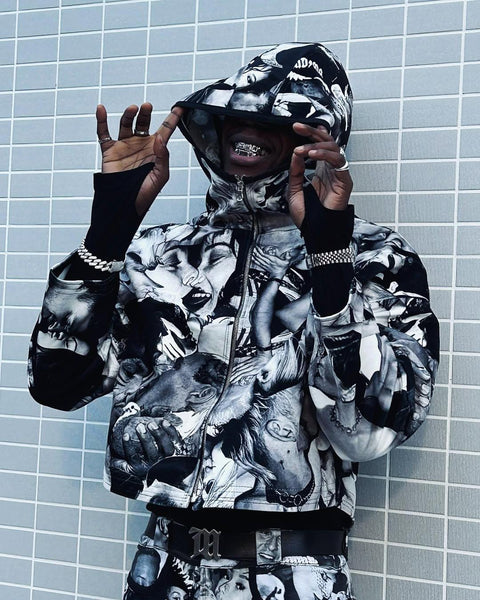
Custom streetwear made for Che Lingo

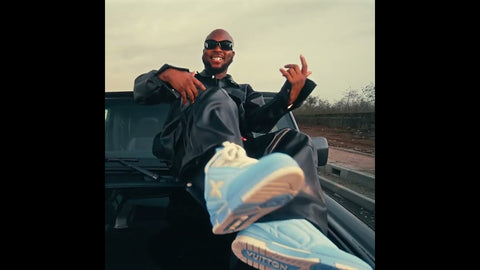
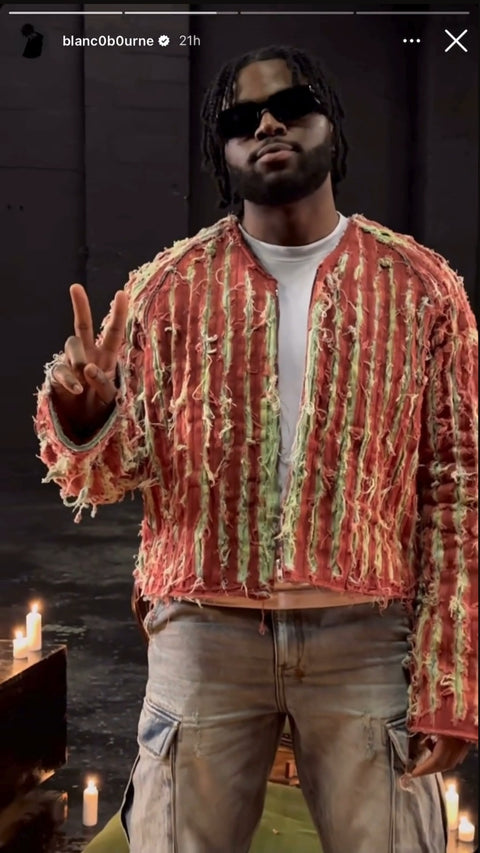
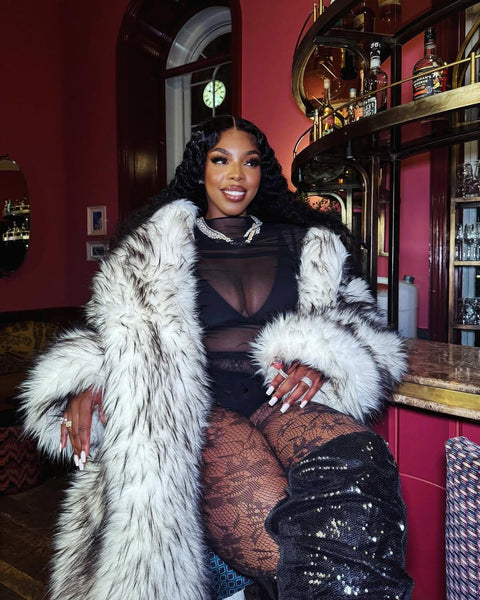
We manufacture for Che Lingo, Blanco, King Promise and Grace Ajilore, and our work has appeared in NME, Teen Vogue, the Crunchyroll Anime Awards and Retail Jeweller.

A shorts run starts the same way as any other: your inseam, your rise, your leg opening, your waistband, your liner or none, your labels. Send what you have and we will quote it.

Get a Shorts Quote on WhatsApp

From Sketch to Delivered Shorts

Six steps, and no tech pack needed to begin.

Work backwards from your drop date: samples in 2-3 weeks, bulk in 3-8 weeks after you approve your sample, plus shipping time to you.

1. Send Your Shorts Idea

And Your Drop Date

Send whatever exists: a sketch, a moodboard, a reference photo, or a pair you already own that sits where you want yours to sit. Tell us the inseam if you know it, and tell us when the shorts need to be on sale, because that date is what sets everything else. We will ask about fabric family, liner, waistband and pockets, then send a tailored quote. If the design is not finished, our team provides full design support and handles the technical development.

  • MOQ is 50 pieces. Specific designs, colours and fabrics can affect it, so ask about yours

2. Pattern and Fit Development

Inseam, Rise and Leg Opening

Once the quote is agreed we develop the pattern: rise, inseam, finished outseam length, thigh width, leg opening, any side split, waistband depth and, where there is one, a separate pattern for the liner. It is then graded across your full size range, so the hem lands in the same place on the leg at every size rather than creeping up the thigh at the small end.

  • Pattern cutting, fit development and grading are included as standard

3. Fabric, Trims and Decoration

Shell and Liner Together

We hold no stock, so fabric is sourced or produced for your order. Where the short is lined, shell and lining are chosen together and matched to the same colour reference, and the same applies when the short has to sit beside a tee in a set. Elastic width, cord, eyelets, tips, waistband labels and woven tags are specified now, and artwork is scaled against your smallest graded panel before anything is cut.

  • Pantone colour matching and custom-dyed fabrics available

4. Your Shorts Sample

2-3 Weeks

You get a pair in your hands before anything goes to bulk. Put them on, sit down in them, load the pockets, then check where the hem actually falls on someone tall and someone short. Wash them and look at the waistband again. A free sample of each design is included with every committed bulk order; a standalone sample without a bulk commitment is charged. One sample revision round is free, further revisions are chargeable, and changes to your quote are always free.

  • Nothing goes to bulk until you approve your sample

5. Bulk Production

3-8 Weeks After Approval

Your approved sample becomes the reference for every piece in the run. Shorts are cut, stitched and finished by hand at our own dedicated overseas facility, with your labels, tags and trims applied to spec, and the inseam measured against the approved sample rather than against the original pattern.

  • 3-8 weeks after sample approval, plus shipping

6. Quality Control and Shipping

4 Stages, Then Worldwide

Every order passes fabric inspection, in-process checks, post-production inspection and a final pre-shipment review before it is packed. Your shorts then ship worldwide. The UK is our priority market, and we also deliver to the USA, Canada, Australia and Europe.

  • Checked at four stages before anything leaves the factory

Custom Shorts Manufacturing FAQs

Straight answers to what brands ask before commissioning a shorts run.

What inseam should my shorts be?

Do my shorts need a liner, and what are the options?

Why does waistband elastic twist, and how do you stop it?

Can I have cargo, zip or welt pockets on a short?

Can you make cycle shorts?

Can you make a matching T-shirt and short set?

What fabric weight should a short be?

What is your minimum order, and when should I place it?

As seen in

As seen on

  • Che Lingo wearing NO FUGAZIChe Lingo
  • King Promise wearing NO FUGAZIKing Promise
  • Blanco wearing NO FUGAZIBlanco
  • Grace Ajilore wearing NO FUGAZIGrace Ajilore

READY TO MAKE YOUR SHORTS?

Send a sketch, a moodboard or a pair you already own, plus the inseam you want and the date they need to be on sale. We will come back with a tailored quote, make your sample first, and start bulk production only once you approve it.

Get Your Shorts Quote on WhatsApp