Varsity Jacket Manufacturer UK

Cut-and-Sew Varsity Jackets From 50 Pieces

NO FUGAZI is a varsity jacket manufacturer based and managed in London, producing custom letterman jackets from 50 pieces at our own dedicated overseas facility. Bodies, sleeves, rib trim, lining and every patch on the jacket are made to your spec rather than applied to a ready-made blank. Samples take 2-3 weeks, bulk production takes 3-8 weeks after you approve your sample, and no tech pack is required to get a tailored quote.

A varsity jacket is a decorated garment first. Nobody buys one for the melton. They buy it for what is on the chest, the back and the sleeves, which is why most of this page is about chenille, twill and thread rather than fabric weight.

That changes how the jacket has to be built. A chenille letter the width of a hand sits on a body panel that also has to carry a snap placket, a welt pocket and a set-in sleeve seam. Get the order of operations wrong and the patch lands across a seam, or the placket runs straight through the middle of your letter. We plan every placement against the pattern before anything is cut.

We hold no blank varsity jackets. Uniform suppliers sell blanks by the box for exactly that purpose, and if you want a dozen jackets with a crest applied, that route is faster. This page is for a brand producing its own varsity: your body and sleeve combination, your stripe sequence, your lining, your patches, your labels.

You do not need a tech pack. A sketch, a moodboard, a reference photo or a varsity jacket you already own is enough to start. Pattern and fit development happen in house. If you do already have a tech pack, send it and we will quote straight from it.

Varsity jacket production at a glance

Varsity jacket manufacturing specification

Everything below is standing policy, not an estimate. Where a figure is a range, the range is real and depends on your spec.

Minimum order
50 piecesSpecific designs, colours and fabrics can affect the MOQ. Leather sleeves and multi-colour chenille sets are worth raising early. Send your design and we will confirm it for yours.
Production method
Cut and sewBodies, sleeves, rib trim and lining are made to your pattern and assembled by hand. We hold no blank varsity jackets and do not decorate ready-made stock.
Sample lead time
2-3 weeksYour sample comes decorated, so you approve the patch placement as well as the fit.
Bulk lead time
3-8 weeks after sample approvalPlus shipping to your destination.
Tech pack
Not requiredA sketch, a moodboard, a reference photo or a varsity jacket you already own is enough. Pattern and fit development happen in house. If you already have a tech pack, we will quote from it.
Body and sleeves
Wool melton, leather, PU, knit or satinMelton body with leather or PU sleeves, all-melton, a sweat-weight knit build, or a satin varsity. Two different builds can run in the same order as separate styles.
Rib trim
Knitted to your stripe specCollar, cuff and hem rib in your yarn colours, with the stripe order, band widths and tipping set by you.
Decoration
Chenille patches, twill applique, embroidery, chain stitch, woven and leather patchesScreen print and DTF are available on knit, satin and nylon builds.
Branding
Custom labels, woven tags and custom trimsPrivate label and white label both available. Your jackets carry your branding, not ours.
Based
London, UKManaged from London and manufactured at our own dedicated overseas facility.
Quality control
4 stagesFabric inspection, in-process checks, post-production inspection and a final pre-shipment review, including patch placement against your approved sample.
Payment
Bank transferTerms are agreed as part of your quote.
Get a varsity jacket quote on WhatsApp

Send your artwork, a moodboard, or a varsity jacket you already own. All three work.

Body, Sleeves and Rib: Three Fabrics in One Jacket

A varsity jacket is unusual because it is assembled from three materials that behave nothing like each other, joined at seams that are on show. The body is woven, the sleeves are often leather or a coated synthetic, and the collar, cuffs and hem are knitted. Each one is chosen separately, and each one changes what decoration you can put on the jacket.

The body and sleeve combination

This is the first question we will ask, because it sets the weight of the jacket, the way it hangs on the shoulder and which decoration methods stay on the table.

BuildWhat it isHow it behaves
Melton body,
leather sleeves
The original letterman. Melton is wool that has been milled and felted until the weave closes up, so it cuts clean and does not fray at a raw edge.The heaviest and warmest version, and the one people recognise instantly. Leather is cut from hides, so a sleeve is built from more panels than you might expect and grain varies piece to piece. That variation is part of the material, not a fault.
Melton body,
PU sleeves
The same wool body with a polyurethane-coated sleeve in place of hide.Colour and finish stay identical across a whole run, the jacket sits lighter on the shoulder, and there is no animal product in it. PU creases differently from leather and will not develop the same patina over years.
All meltonBody and sleeves both in wool melton, usually with the sleeves in a contrast colour.Reads quieter and warmer in the hand. It also opens up the sleeves for direct embroidery and chenille, which a leather sleeve makes awkward.
French terry or fleeceA sweat-weight varsity: knitted body and sleeves, varsity rib trim, snap placket.Softer, lighter, and the easiest of these builds to decorate. It gives up the structure that makes a melton jacket stand up on the shoulder.
Satin, nylon or ripstopA coach-jacket construction wearing varsity trim.Light and glossy, and the natural choice for a spring drop. It needs a lining, and it gives a slippery ground that a heavy patch has to be properly backed onto.
Corduroy, boucle or tweedA fashion reading of the same shape.Distinctive, and it photographs well. Pile and texture fight fine embroidery, so decoration usually moves to applied patches instead of direct stitch.

You are not locked into one answer for a whole range. A melton and leather jacket and a fleece varsity can run in the same order as two styles. If you own a jacket whose weight and handle you like, send it, and we will source to match rather than guess from a description.

Rib trim and how the stripe is specified

Rib is the part most first-time buyers underestimate. The collar, cuffs and hem are not cut from yardage and hemmed. They are knitted to shape as separate trim pieces, in your yarn colours, with the stripe knitted in rather than printed on. That means the stripe has to be settled before the trim is made, and it cannot be altered once a jacket is finished.

ElementWhat you specifyWhy it matters
Collar ribHeight of the stand, whether it folds down, and the stripe order read outwards from the neck.A tall collar frames back-neck embroidery and stands up when the jacket is worn open. A short one disappears if the customer layers a hood underneath.
Cuff ribDepth, and whether the stripe sequence mirrors the collar or reverses it.Deep cuffs pull the sleeve up and shorten the visual arm. On a leather or PU sleeve the cuff join takes the strain of the arm bending, so depth is a durability decision as well as a styling one.
Hem ribDepth, and how tightly it grips the body.The hem sets the silhouette. Deep and snug gives the blouson shape the garment is known for. Shallow and loose lets the jacket hang straight and reads more contemporary.
Stripe sequenceColours in order and the width each band should read at. We work in knitted rows rather than millimetres, because rows are what the machine actually produces.Two colours in a wide, narrow, wide arrangement is the classic. Three is common. Past four colours the bands go thin and the pattern stops reading from across a room, which is the only distance that matters.
Yarn and recoveryFibre content, and whether elastane goes into the trim.Elastane is what stops cuffs going slack after a season of being pushed up the forearm. Wool-rich rib feels better in the hand; a blend holds its shape longer.
TippingA single contrast row right at the edge of the collar, cuff and hem.A small addition, and the one detail that makes trim look specified for your brand rather than pulled from a standard book.

Pantone colour matching applies to the rib yarn as well as the body fabric, so a stripe can be built out of your exact brand colours. Trim is knitted before the jacket is assembled, which is why we ask about it at quoting rather than at sampling.

How Your Varsity Jacket Is Built

Six construction decisions that get settled before a pattern is cut. You do not need an answer to all six. Arriving with a view on two or three is enough for us to quote properly, and we work through the rest with you.

Snap Placket or Zip Front

The traditional letterman closes on press studs behind a placket, usually five or six, with a wind flap behind them. It leaves the chest uninterrupted, which matters when a chenille letter has to sit close to the centre front. A zip is more secure and better in weather, but the zip tape runs straight through the area your artwork wants. Snaps come as ring or prong, in antique brass, nickel or colour-matched caps, and on heavy melton they are set through a reinforced placket so they do not work loose.

Rib Collar, Stand Collar or Hood

Most varsity jackets finish at a rib collar, and the height of that stand changes the whole read of the garment. A corduroy or melton stand collar pushes the jacket towards a coach jacket. A jersey hood layered under a rib collar is a common streetwear move. Each option is a different neckline pattern and each one leaves a different amount of room for back-neck branding.

Welt Pockets and How They Sit

The varsity standard is a welt pocket set into the body at a slight angle, single or double welt, bagged out in the lining. The angle and the height decide whether the jacket reads sportswear or workwear. The usual failure is a welt that gapes because the pocket bag drags it open, so we interline the welt and bar-tack both ends. Patch pockets and side-entry slash pockets are both available, and an internal chest pocket is easiest to add at pattern stage.

Lining: Quilted or Satin

The lining is what a customer sees the moment the jacket hangs open on a rail, so it is worth deciding rather than defaulting. Plain satin is light and slides over a hoodie without dragging. A diamond-quilted lining over a thin wadding adds genuine warmth and gives the inside of the jacket a finished look. Quilting is done to the lining panels before the jacket is closed up. You can print the lining, embroider it, run a contrast colour only the wearer sees, or put a woven tag on the inside pocket.

Sleeve Setting and Panel Joins

Classic letterman sleeves are set in, with a shaped head and a defined shoulder point. A raglan sleeve gives a softer athletic line and is more forgiving across a wide size range. Leather and PU sleeves need a little more ease than wool because the material does not give, and they are built from more panels since a hide only runs so far. Those joins are visible on the finished jacket, so where they fall is a design decision rather than a factory one.

Fit, Length and Where the Hem Lands

Body width, body length and the point at which the hem rib finishes on the hip decide whether your jacket reads cropped, classic or oversized. Melton carries weight, so an oversized varsity hangs differently from an oversized hoodie cut to the same measurements. Send a jacket that fits the way you want yours to fit, or your own measurements, and the pattern is graded across your full size range from there.

Chenille, Twill and Thread

On most garments decoration is a finishing step. On a varsity jacket it is the product. Somebody decides about this jacket in a second, from across a room, on the basis of what is on the chest and the back. This is the part of the spec worth spending your attention on.

Chenille letterman patches

Chenille is a tufted yarn worked into a felt or melton base, then usually mounted on a contrast felt border with a chain-stitched or merrowed edge. It is the texture people read as varsity, and it is the reason the garment looks like nothing else on a rail.

Three things decide whether it works. Scale: chenille needs height, because the tufting is the point, and a small patch just reads as a fuzzy shape with no texture in it. Form: a patch is built from cut felt shapes, so bold blocky letterforms and simple silhouettes translate cleanly while hairline script and fine internal detail do not. Fixing: a patch can be stitched down for good, or supplied loose with a snap or hook-and-loop mount so the wearer can move it between jackets, which some brands use for collaborations and limited drops.

Chenille sits proud of the panel and stiffens the area it covers. That is normal, and it is why we plan placement against the pattern before cutting: a large chest patch should not straddle the placket seam, and back work needs to clear the yoke seam and both armholes or it will pull when the wearer moves.

The full decoration set

MethodWhat it isWhere it goes on a varsityWorth knowing
Chenille patchTufted yarn on a felt base, edged in contrast felt.Chest letter, large back piece, sleeve numbers, year and sport bars.Wants scale and bold shapes. It adds real thickness, so it is planned into the panel rather than added at the end.
Twill appliqueCut twill shapes laid onto the panel and stitched down with a satin or zig-zag edge, often layered two or three deep.Large back names and numbers, big chest letters, sleeve digits.Flatter and crisper than chenille, with sharper corners and cleaner counters. The usual answer when the artwork is typographic and has to stay readable.
Direct embroideryStitched straight into the garment panel.Left chest, back neck, sleeve hits, above a welt pocket, small marks on rib.Melton has a nap, so it needs the right backing or the stitch sinks into the surface. Fine type below a certain size closes up in thread. Leather and PU take embroidery, but every needle hole in them is permanent.
Chain stitchA looped single-thread stitch worked as a continuous line, the traditional varsity script.Names, signatures, flowing lettering across the back or chest.Reads as vintage in a way flat satin-stitch embroidery does not. It suits line work rather than solid filled areas.
Woven or embroidered patchA patch made away from the garment and then applied.Sleeve badges, shoulder hits, crests, collaborator marks.Carries fine detail and a high colour count that direct stitch would lose. Also the practical route when one element changes between drops and the rest of the jacket does not.
Leather or PU patchDebossed or laser-etched, sewn onto the panel.Chest, sleeve, hem corner, or below larger back work.Quiet and expensive-looking against melton. It carries a mark or a monogram well and intricate artwork badly.
Screen print and DTFInk laid on the surface, or a heat-applied printed transfer.Fleece, satin and nylon bodies only.Melton nap and leather coating both fight surface printing. If your build is a sweat-weight or satin varsity, print comes back onto the table for the body panels.

Placement, and what each one has to clear

  • Left chest. Has to clear the placket seam on one side and sit above the welt pocket on the other. That gap is narrower than people assume, and it is the constraint that most often forces a chest letter to shrink.
  • Full back panel. The largest uninterrupted area on the jacket and the reason most varsity jackets get bought. It takes an arched name over a large letter or number, or a single graphic worked in twill and chenille together.
  • Upper back and yoke. A name, a city or a small arch sitting above the main back piece.
  • Upper sleeve. Numbers, year bars, a repeated hit. On leather and PU sleeves this normally becomes an applied patch rather than direct stitch.
  • Collar and cuff rib. Small embroidery only. Rib stretches when it is worn, so anything stitched into it distorts as the garment moves.
  • Inside the lining. A hidden mark, an inside-pocket tag or a printed lining. Several brands use this instead of a visible outer logo.

What we need to quote your decoration

  • Artwork as vector where you have it, or a clear photo or drawing where you do not. We work from either.
  • The height you want each piece to be, in centimetres, at its largest placement.
  • How many colours are in each patch, and whether those colours are yours to match or ours to suggest.
  • Whether patches are stitched down permanently or supplied detachable.
  • How many separate pieces of decoration go on one jacket, and which ones are identical across the run.

A jacket with a single embroidered chest mark and a jacket carrying a full chenille back piece, two sleeve bars and a chain-stitched name are different amounts of work, so tell us the complete set at the start and the quote will be right the first time. Custom labels, woven tags and custom trims sit alongside any of the above.

Made and Decorated by Hand, Not Pulled From a Shelf

Real production. Panels are cut, trim is knitted, patches are made and applied, and every piece is checked at four stages before it leaves the factory.

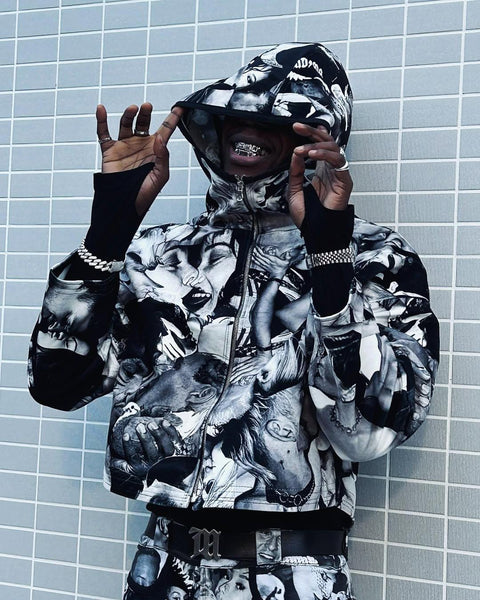
Custom streetwear made for Che Lingo

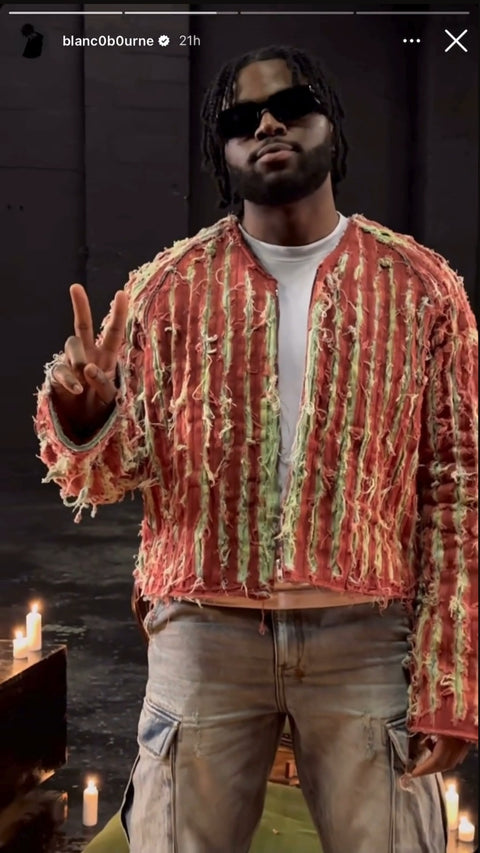
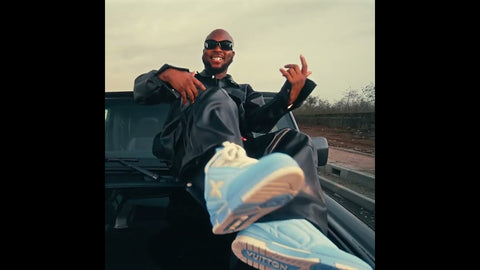
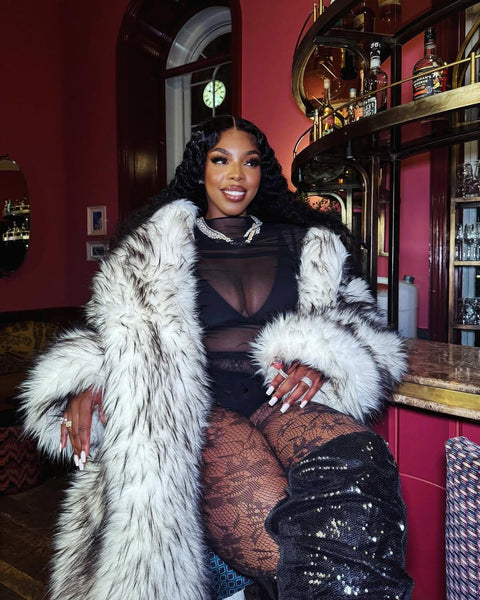
This piece was cut and sewn for Che Lingo. We also manufacture for Blanco, Grace Ajilore and King Promise, and our work has appeared in NME, Teen Vogue, the Crunchyroll Anime Awards and Retail Jeweller.

Your varsity starts the same way: your body and sleeve combination, your stripe sequence, your patches, your lining, your labels. Send the artwork and we will quote it.

Get a Varsity Jacket Quote on WhatsApp

From Artwork to Delivered Jackets

Six steps, and no tech pack needed to begin.

The lead times below are real ranges rather than best cases: samples in 2-3 weeks, bulk in 3-8 weeks after you approve your sample, plus shipping time to you.

1. Send Your Varsity Idea

WhatsApp Is Quickest

Send whatever exists: artwork, a sketch, a moodboard, reference photos, or a varsity jacket you already own. Tell us the body and sleeve combination you have in mind and roughly what decoration is going on it, and we come back with a tailored quote. If the design is not finished, our team provides full design support and handles the technical development.

  • MOQ is 50 pieces. Specific designs, colours and fabrics can affect it, so ask about yours

2. Pattern, Fit and Trim Spec

Your Block, Graded Properly

We develop the pattern: body width and length, armhole and sleeve head, placket width, welt pocket position and angle, and the depth of the collar, cuff and hem rib. It is then graded across your full size range, so an XL is the same jacket as a small rather than a different garment. Your rib stripe sequence is locked at this stage, because trim is knitted to shape before the jacket is assembled.

  • Pattern cutting, fit development and grading are included as standard

3. Fabric, Trims and Artwork Setup

Sourced and Digitised to Spec

Melton, leather, PU or knit is sourced to your spec and rib yarn is dyed to your colours, with Pantone colour matching and custom-dyed fabrics available. In parallel your artwork becomes patch layouts, digitised embroidery files and twill cutting shapes, and every placement is checked against the pattern so nothing lands across a seam or an armhole.

  • Pantone colour matching and custom-dyed fabrics available

4. Your Varsity Sample

2-3 Weeks

You get the jacket in your hands, decorated, before anything goes to bulk. Fasten the snaps, check that the chest patch sits where you drew it, that the cuff rib does not ride up and that the stripe colours read the way you expected in daylight. A free sample of each design is included with every committed bulk order; a standalone sample without a bulk commitment is charged. One sample revision round is free, further revisions are chargeable, and changes to your quote are always free.

  • Nothing goes to bulk until you approve your sample

5. Bulk Production

3-8 Weeks After Approval

Your approved sample becomes the reference for every jacket in the run. Bodies and sleeves are cut, rib trim is knitted, chenille and twill patches are made, and each jacket is assembled, decorated and finished by hand at our own dedicated overseas facility with your labels, tags and trims applied to spec.

  • 3-8 weeks after sample approval, plus shipping

6. Quality Control and Shipping

4 Stages, Then Worldwide

Every order passes fabric inspection, in-process checks, post-production inspection and a final pre-shipment review before it is packed. On a varsity that includes measuring patch placement against your approved sample piece by piece, because a patch sitting a centimetre out is visible from across a room. Your jackets then ship worldwide. The UK is our priority market, and we also deliver to the USA, Canada, Australia and Europe.

  • Checked at four stages before anything leaves the factory

Varsity Jacket Manufacturing FAQs

Straight answers to what brands ask before commissioning a varsity run.

Can you make chenille letterman patches, and what do you need from me?

Should I choose leather sleeves or PU?

How do I specify the stripe pattern on the collar, cuffs and hem?

Snap placket or zip front?

How big does a chenille patch need to be to look right?

Can individual jackets carry different names or numbers?

What is your minimum order, and do I need a tech pack?

How long does a varsity jacket order take, and will I see a sample?

As seen in

As seen on

  • Che Lingo wearing NO FUGAZIChe Lingo
  • Blanco wearing NO FUGAZIBlanco
  • King Promise wearing NO FUGAZIKing Promise
  • Grace Ajilore wearing NO FUGAZIGrace Ajilore

READY TO MAKE YOUR VARSITY JACKET?

Send your artwork, a moodboard, or a varsity jacket you already own. We will come back with a tailored quote, make your sample with the decoration on it first, and start bulk production only once you approve it.

Get Your Varsity Jacket Quote on WhatsApp